


Persian Mythology
Persian Mythology traditions, cosmology, and ancient mythology.
Mythological Figures & Lore
Showing all 23 records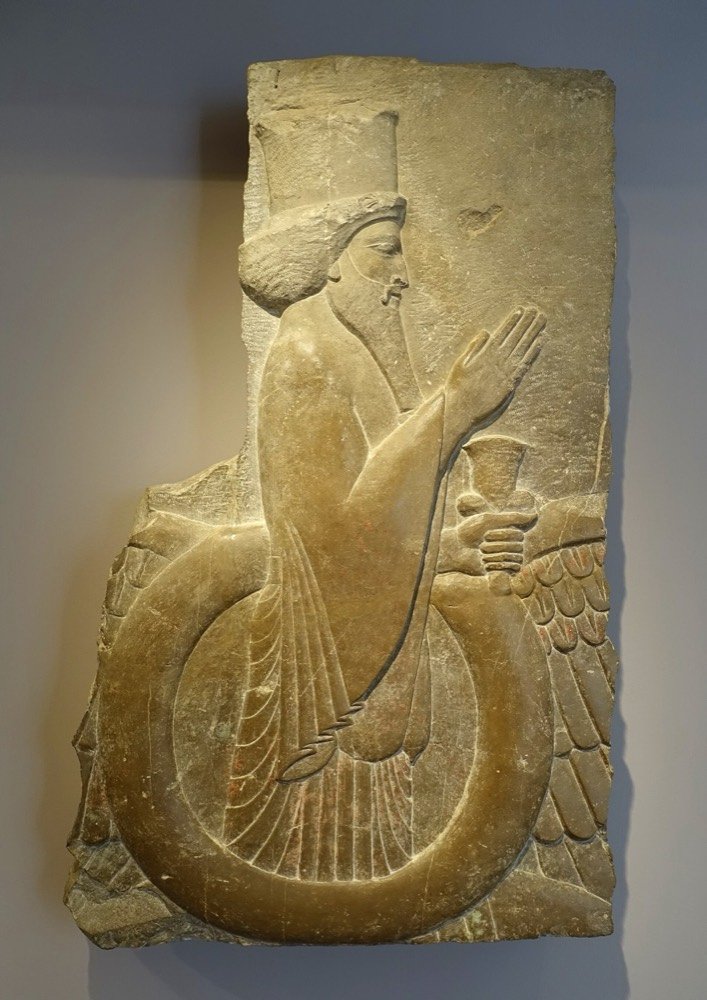 deity
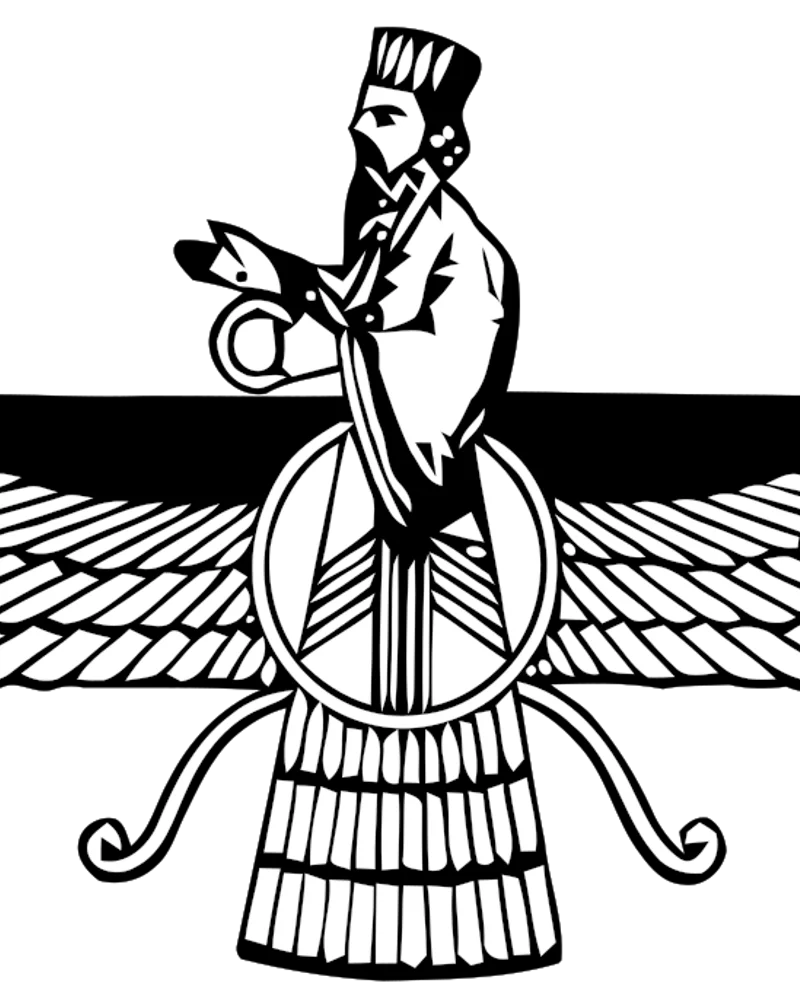
Ahura Mazda
Supreme god of Zoroastrianism, the "Wise Lord" who created the world and the order of asha, locked in a cosmic struggle with the destructive spirit Angra Mainyu.
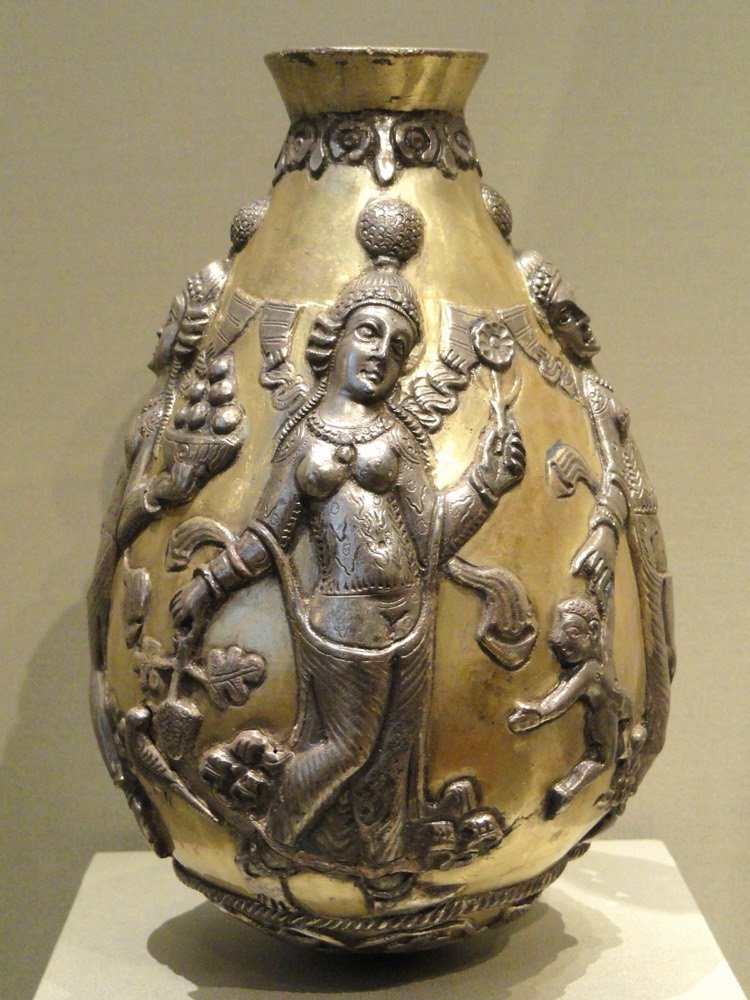 deity
Anahita
Goddess of rivers and fertility, "the moist, the strong, the immaculate." She pours from the divine mountain into the world sea; heroes and tyrants alike offered her sacrifice for victory.
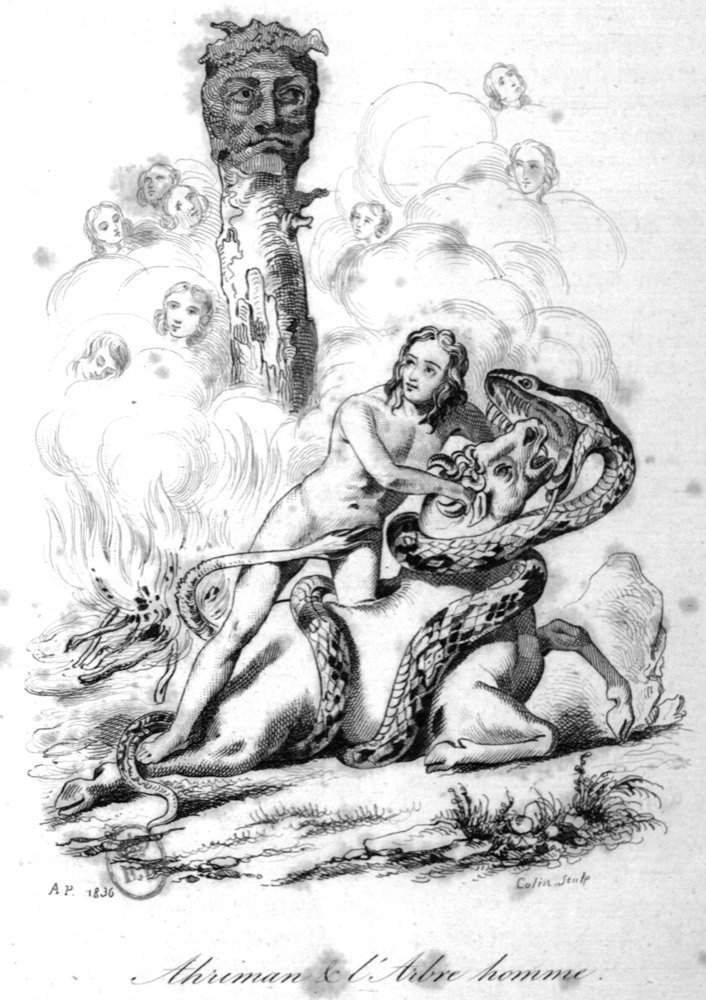 deity
Angra Mainyu
The destructive spirit opposed to Ahura Mazda, known in Middle Persian as Ahriman. He corrupts creation with vermin, disease, and death, and will be defeated at the world's renovation.
 creature
Apaosha
The daeva of drought in the Avesta, who in the shape of a black horse 'stamped with brands of terror' fights the star Tishtrya at the edge of the cosmic sea to keep the rains from falling.
 deity
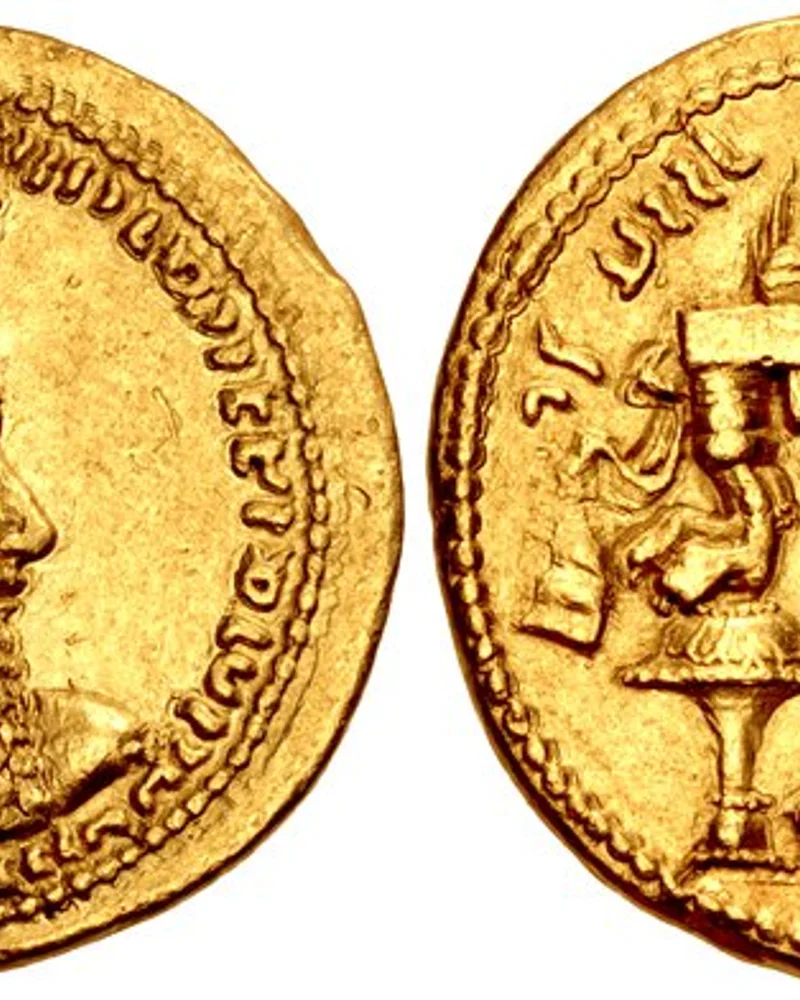
Atar
Fire as a divine being, 'son of Ahura Mazda', the visible focus of Zoroastrian worship, who in the Zamyad Yasht faces down the three-mouthed dragon Azhi Dahaka in the struggle for the royal Glory.
 creature
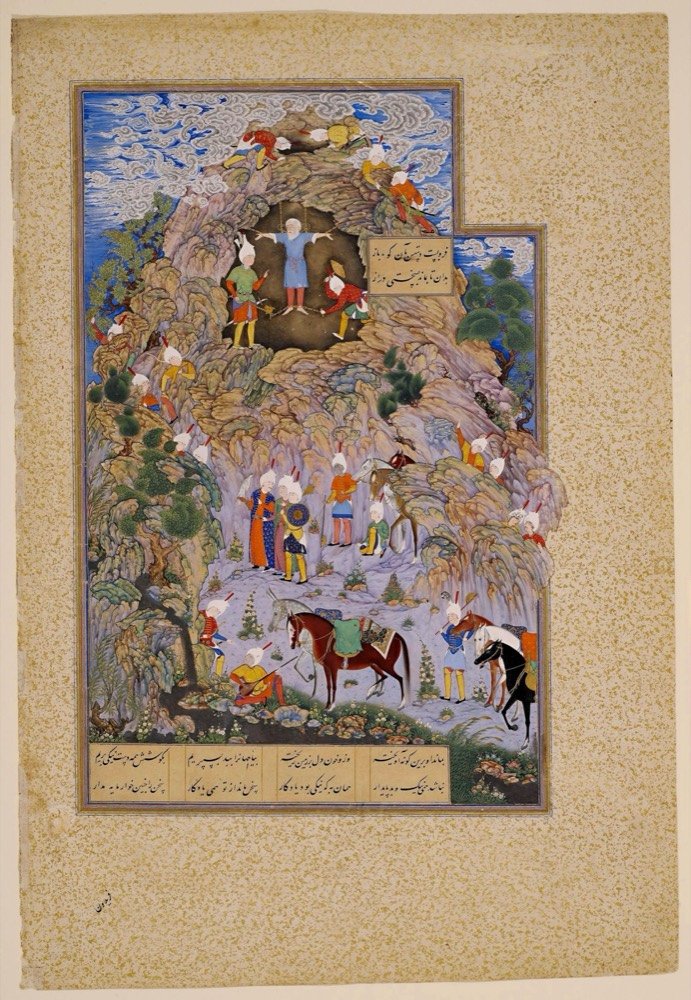
Azhi Dahaka
The three-headed, six-eyed dragon of the Avesta, creature of the destructive spirit; in the Shahnameh he becomes Zahhak, the tyrant with snakes on his shoulders, chained inside Mount Damavand.
 place
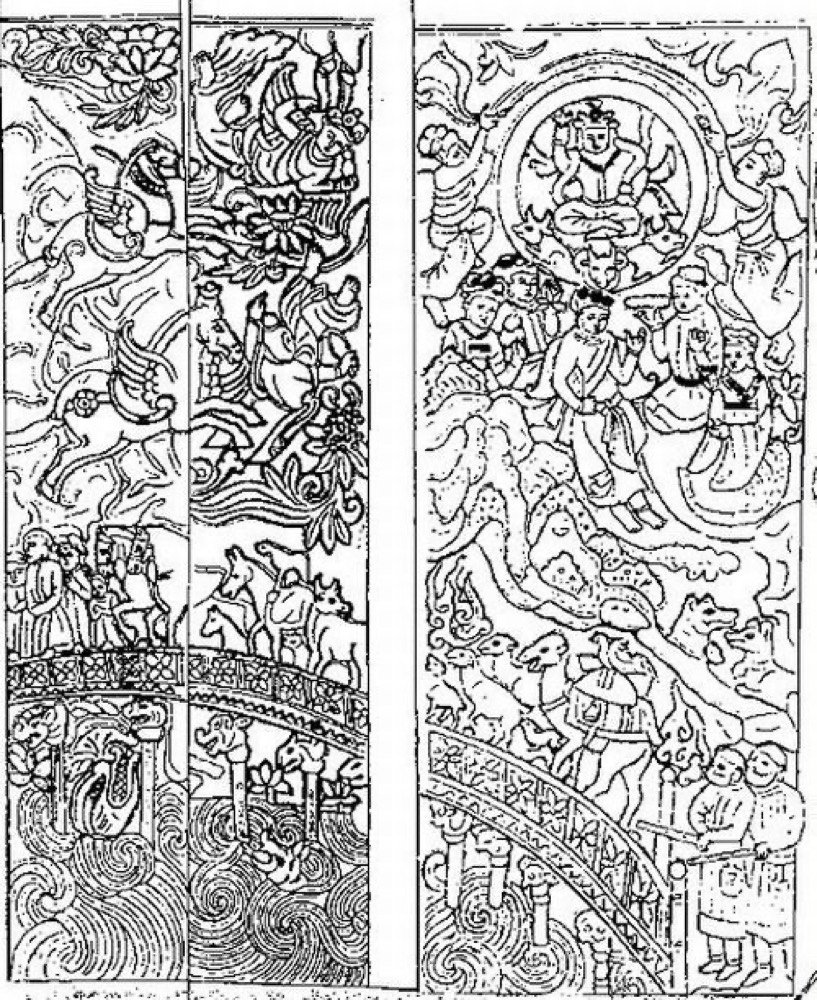
Chinvat Bridge
The bridge every soul must cross after death in Zoroastrian belief: nine spear-lengths wide for the righteous, narrow as a blade's edge for the wicked, with divine judges weighing each life at its head.
 artifact
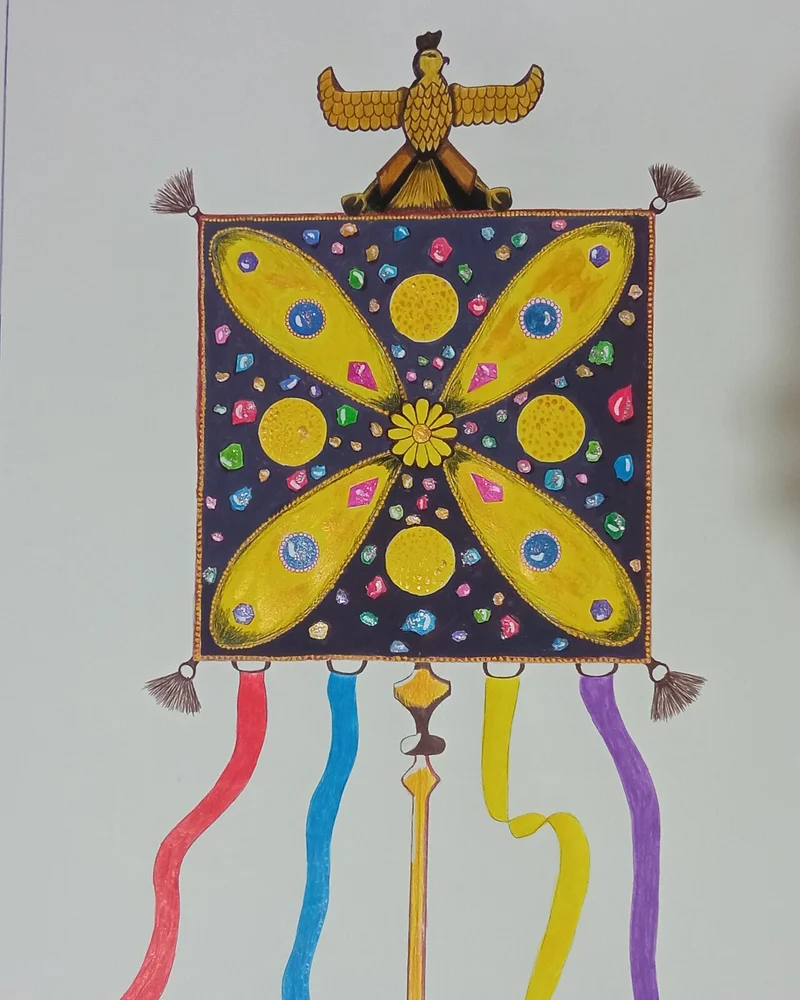
Derafsh-e Kaviani
The banner of Kaveh: the leather apron the blacksmith raised on a spear against the tyrant Zahhak, adorned with jewels by Fereydun and carried as Iran's royal standard until, the historians say, it was captured in the Arab conquest.
 creature
Div-e Sepid
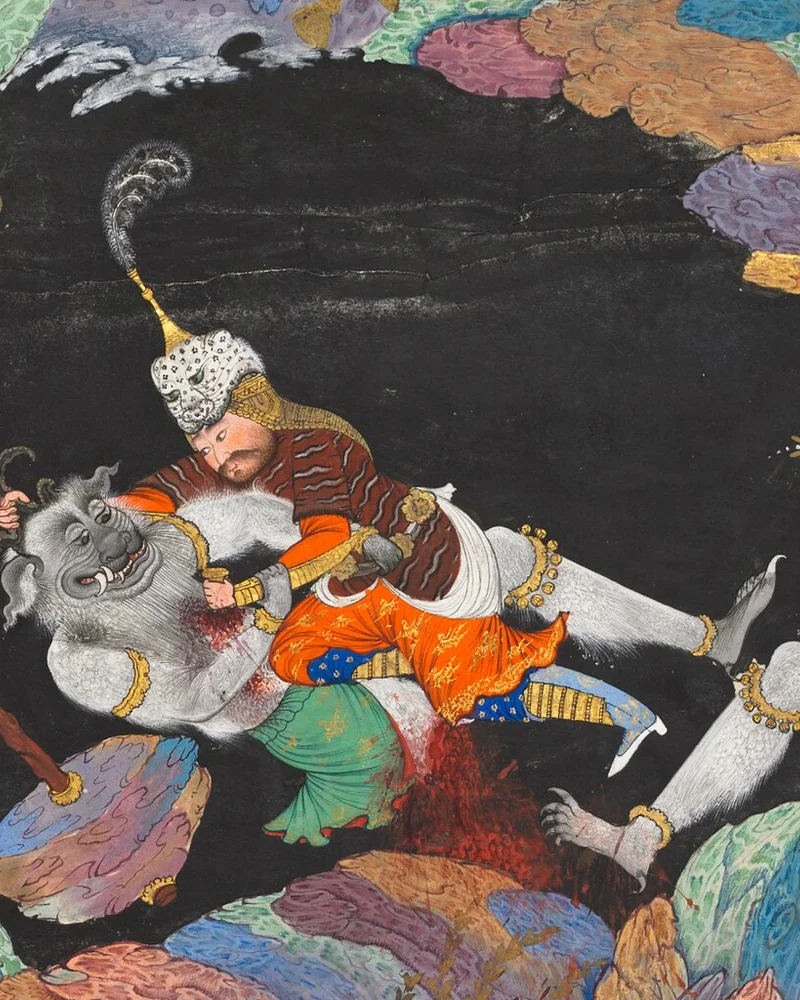
The White Div, lord of the demons of Mazandaran in the Shahnameh, who blinds King Kay Kavus and his army and is killed by Rostam in his cave at the end of the hero's Seven Trials.
 spirit
Div
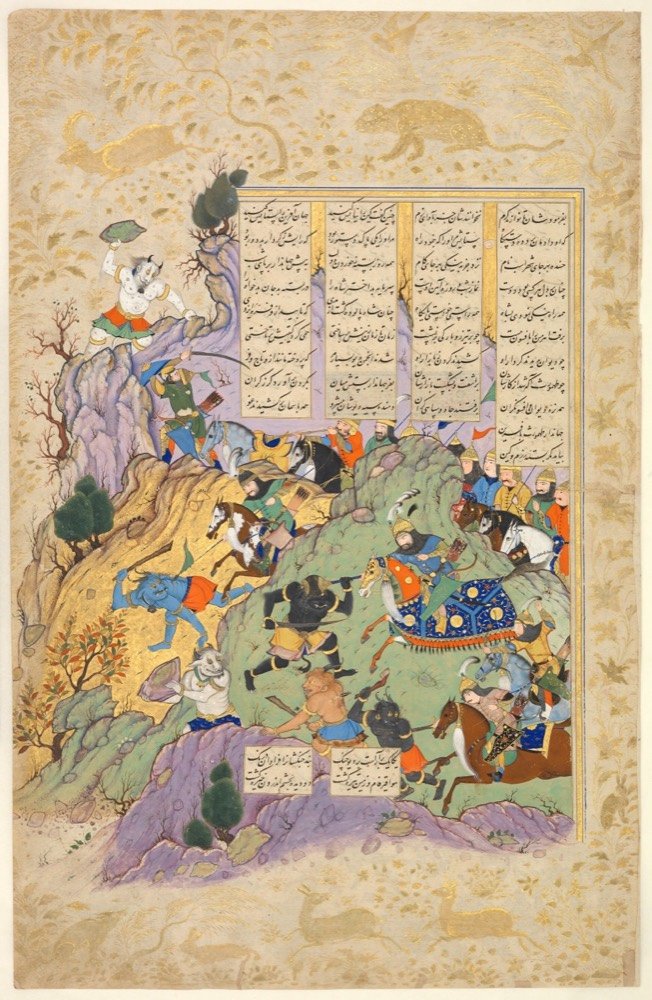
The ogre-demons of Persian legend, descended from the daevas, old gods demonized in the Avesta. In the Shahnameh they haunt Mazandaran, where the White Div blinded a Persian army.
 artifact
Cup of Jamshid
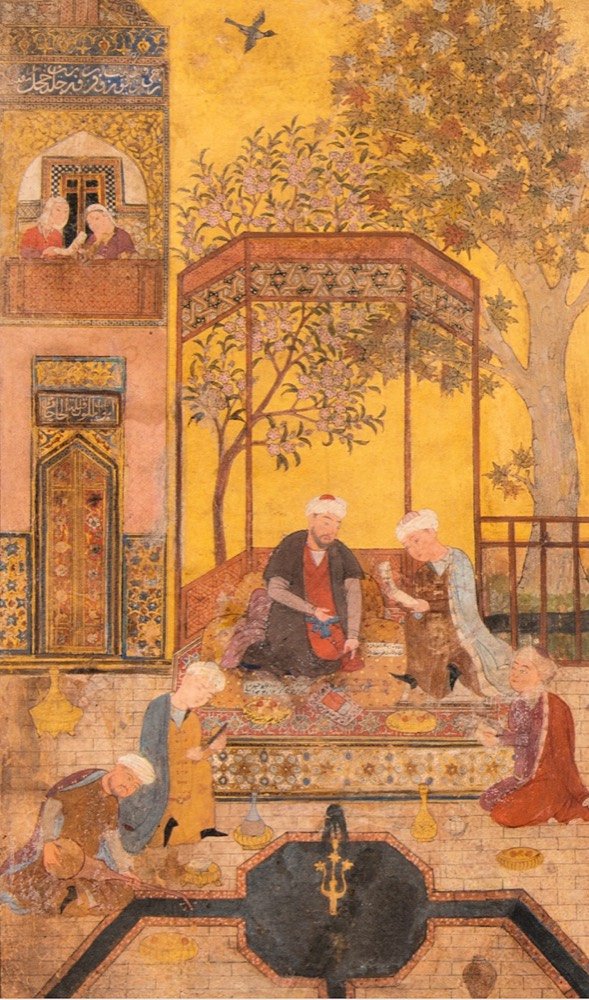
The legendary cup that mirrors all the world. In the Shahnameh, Kay Khosrow uses it to find Bizhan trapped in a pit in Turan; later poetry attributed it to King Jamshid.
 deity
Mithra
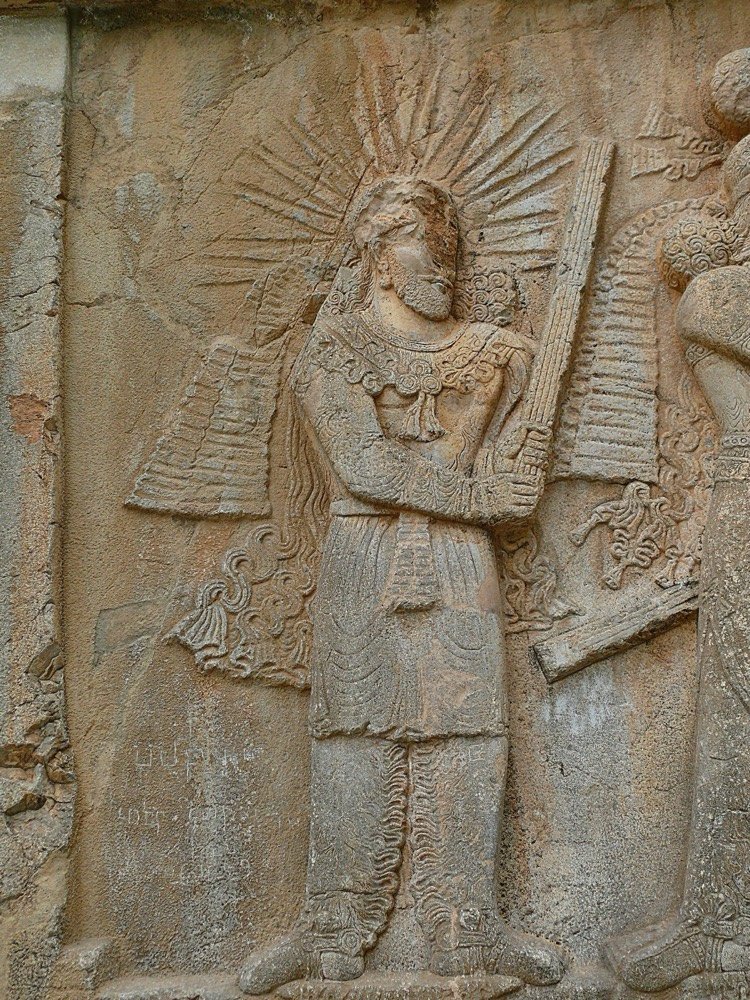
The yazata of covenant and oath, thousand-eared and ten-thousand-eyed, who rides ahead of the sun and watches over all who break their word. His name later traveled to Rome.
 artifact
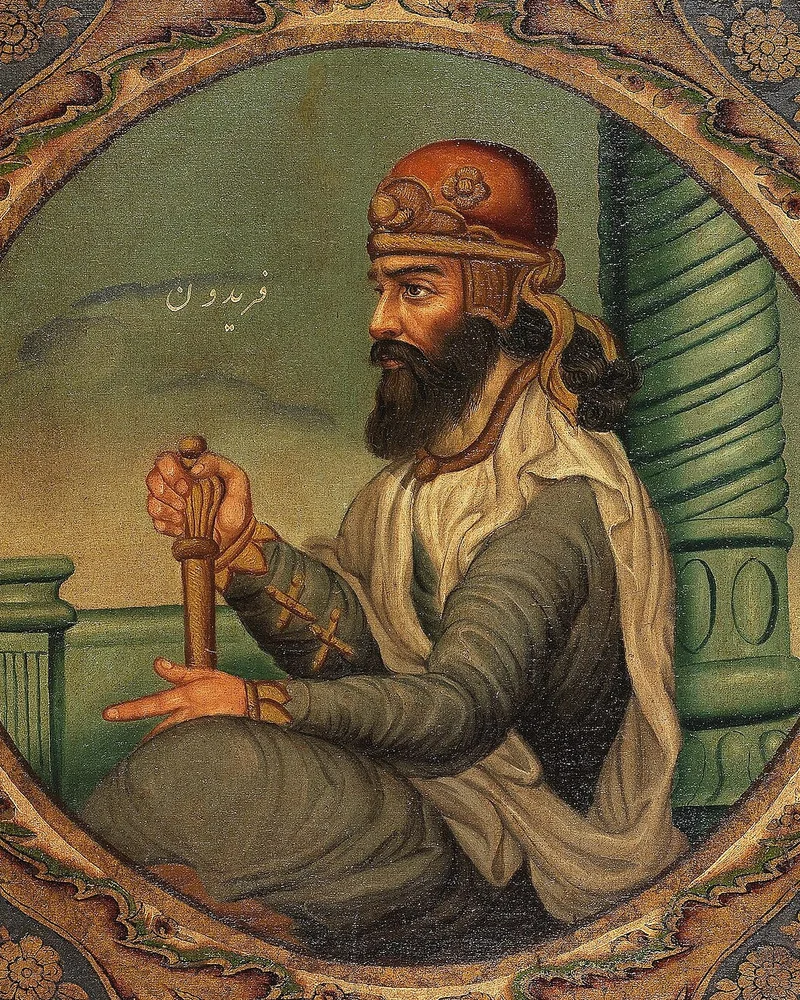
Ox-Headed Mace of Fereydun
The mace with the head of an ox that Fereydun had forged to fight Zahhak, in memory of the cow Barmayeh that nursed him; with it he struck down the tyrant before binding him in Mount Damavand.
 spirit
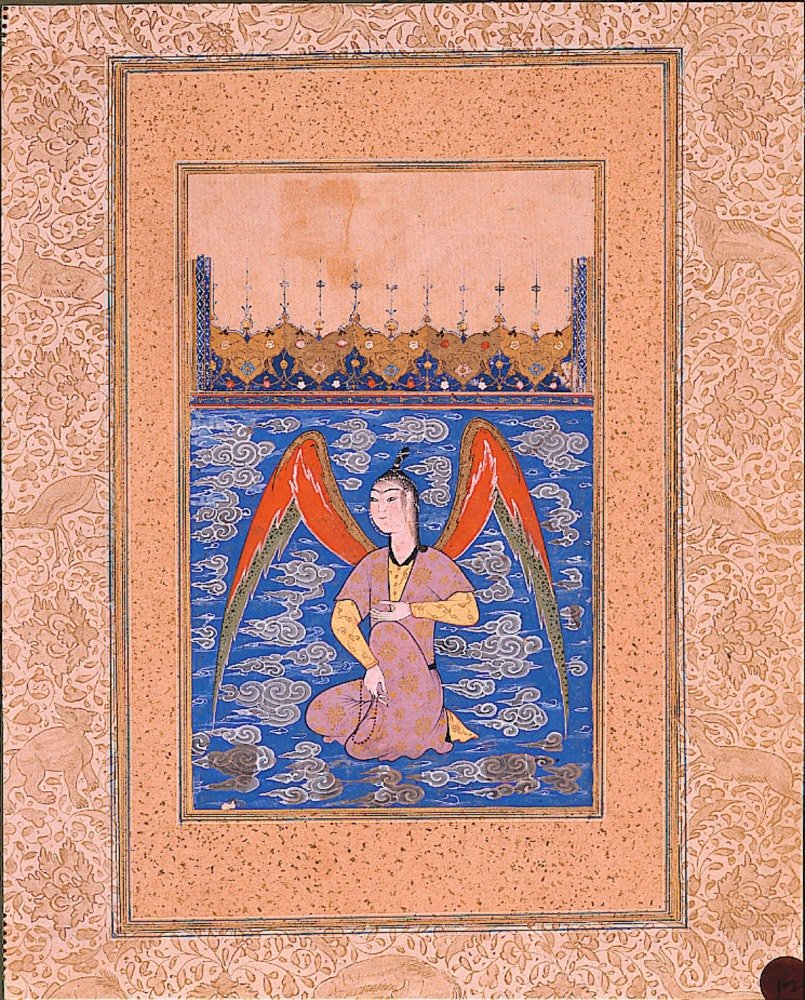
Peri
The beautiful winged spirits of Persian lore, descended from the sorcerous pairikas of the Avesta. Later tales have them living on fragrance, caged by divs, a byword for beauty.
 tale
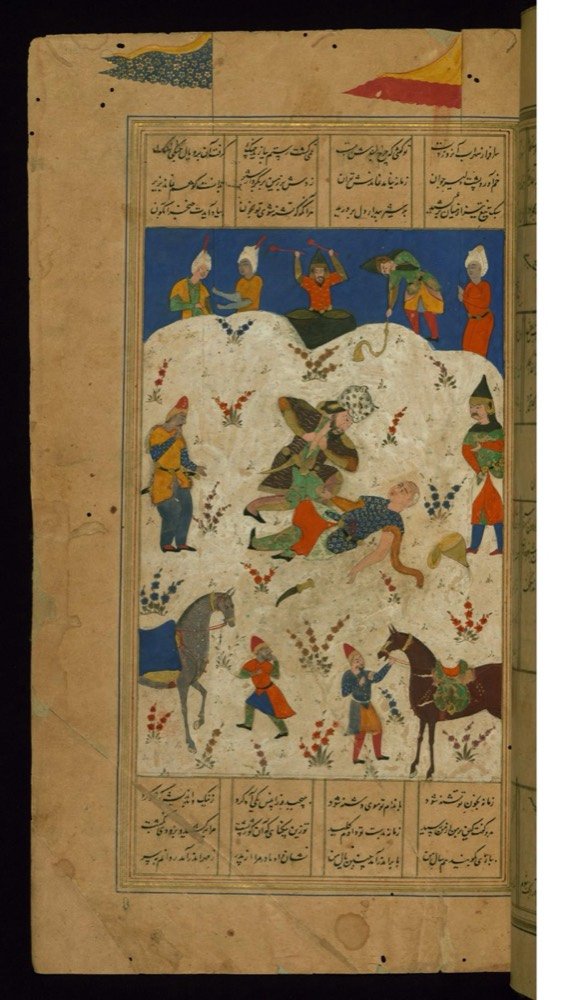
Rostam and Sohrab
The most famous tragedy of the Shahnameh: Rostam strikes down Turan's young champion in single combat, then sees his own token on the dying man's arm — his unmet son Sohrab.
 hero
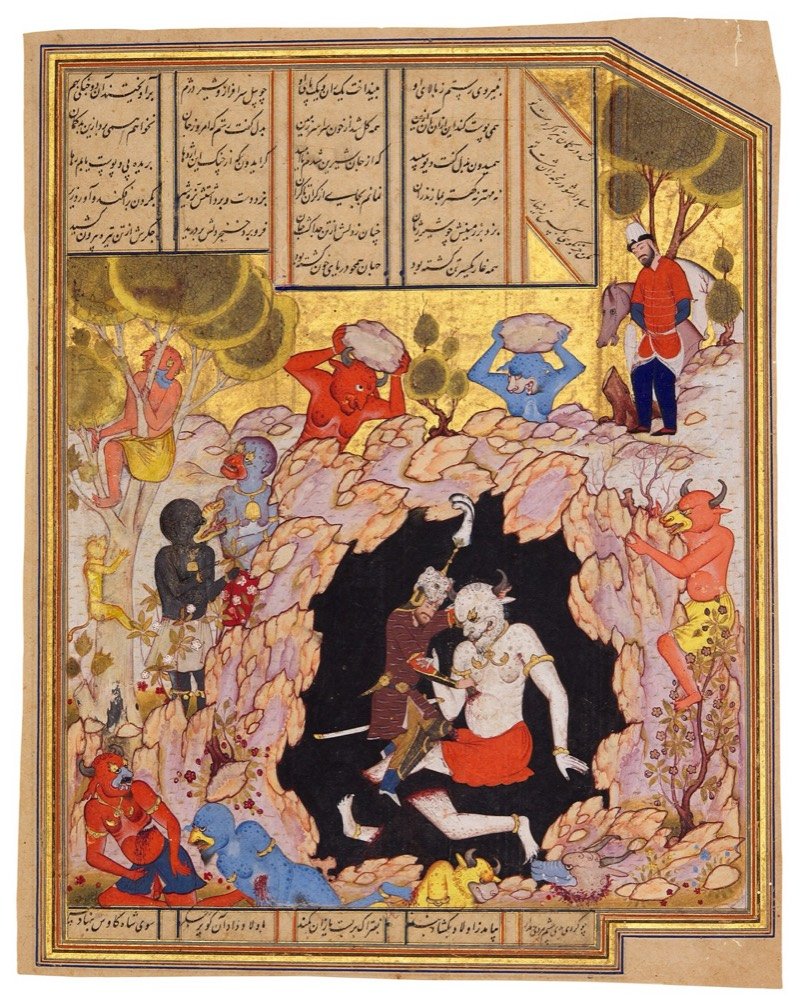
Rostam
The giant hero of Sistan in the Shahnameh, son of Zal and Rudaba. He passed the Seven Trials and slew the White Div, unknowingly killed his own son Sohrab, and died in a brother's trap.
 creature
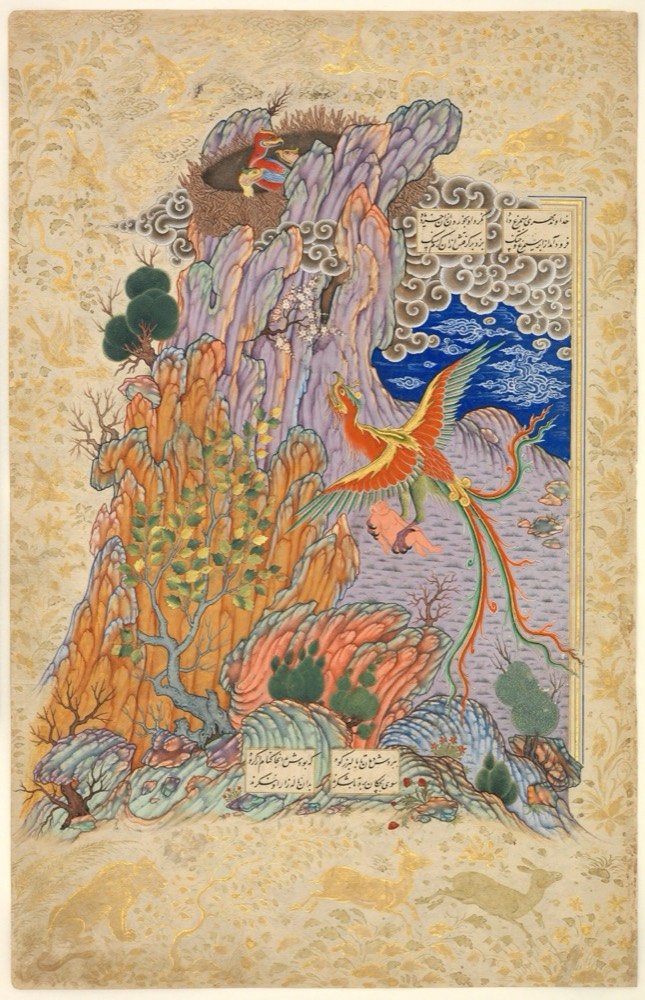
Simurgh
The great wise bird of Persian myth, descended from the Avestan Saena. In the Shahnameh it raises the abandoned Zal on Mount Alborz and twice saves Rostam with its feathers.
 deity
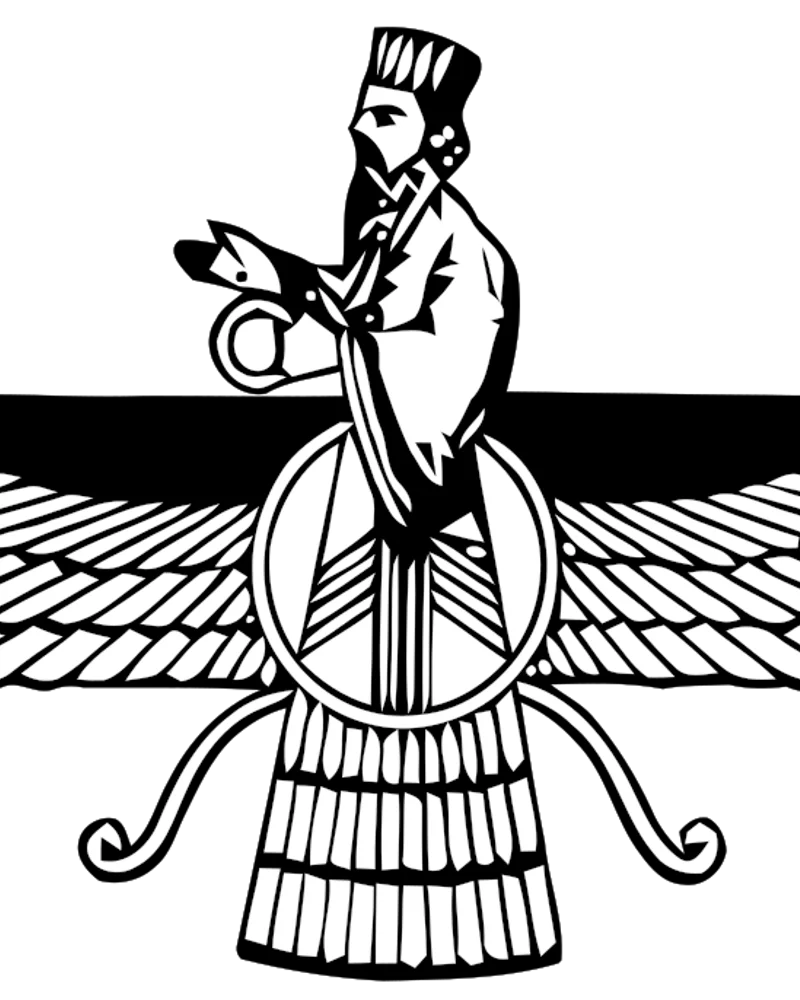
Spenta Armaiti
One of the Amesha Spentas, the Beneficent Immortals: devotion personified, called Ahura Mazda's daughter in the Gathas, and in later tradition the guardian of the earth, whom Yima asks to stretch wider to hold the growing world.
 deity
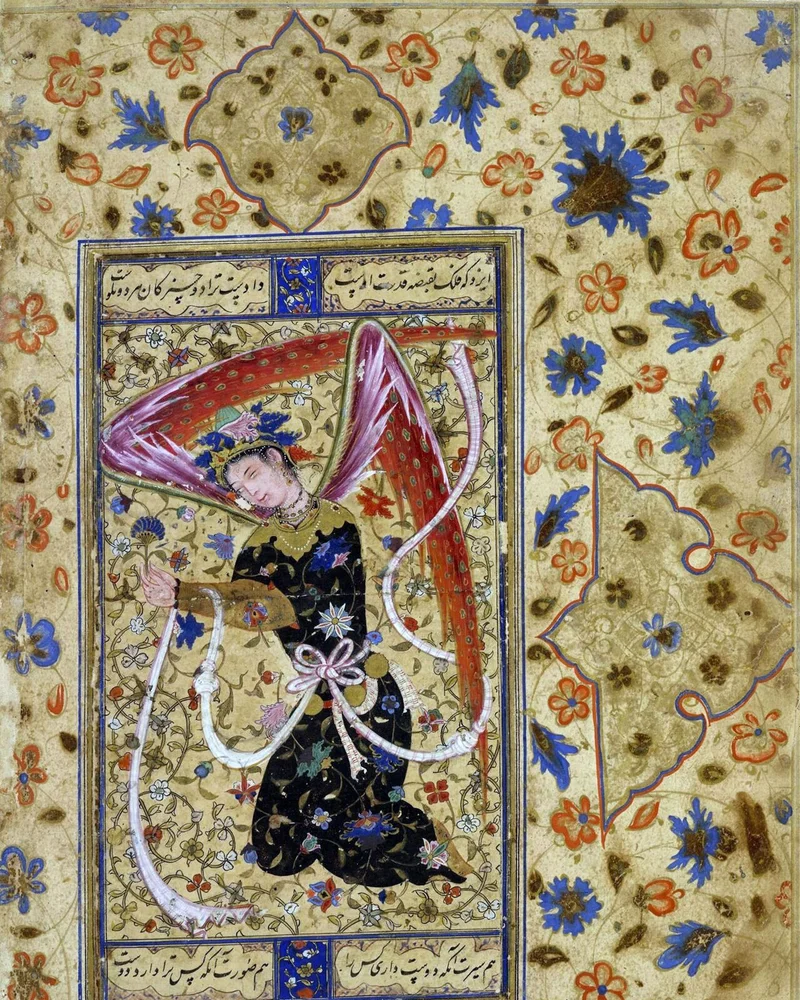
Sraosha
The yazata of 'hearkening' to the divine word, who guards the world by night against the demons, protects the soul for three nights after death, and judges it at the Chinvat Bridge with Mithra and Rashnu; in the Shahnameh, as Sorush, a heavenly messenger.
 deity
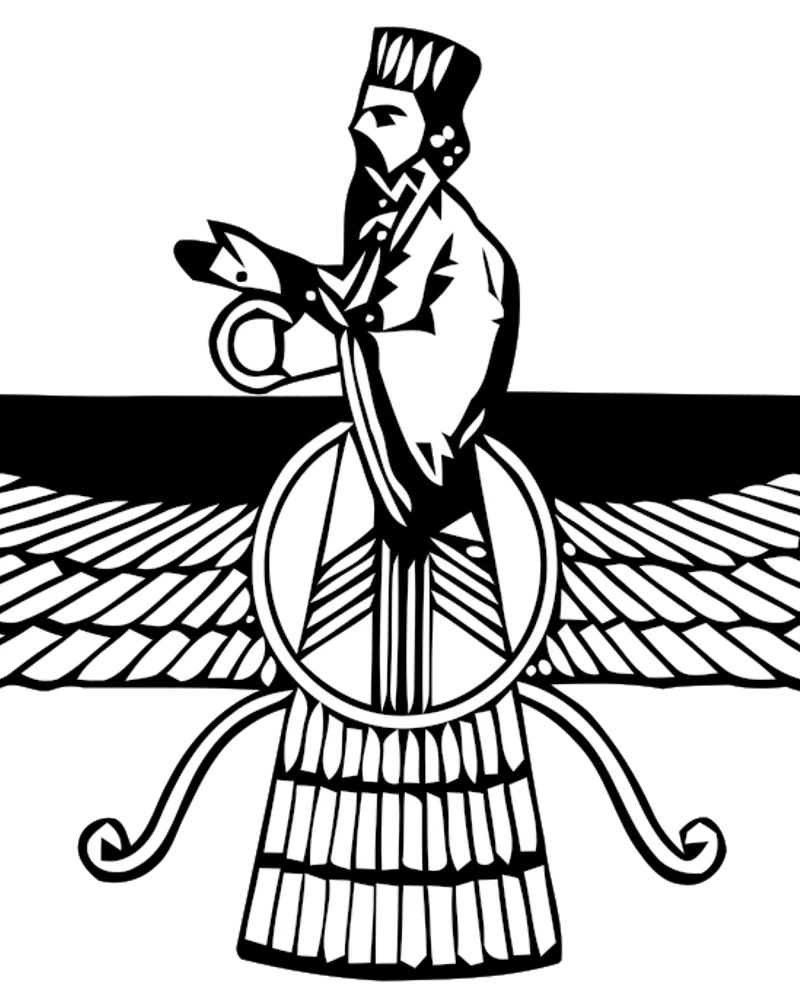
Tishtrya
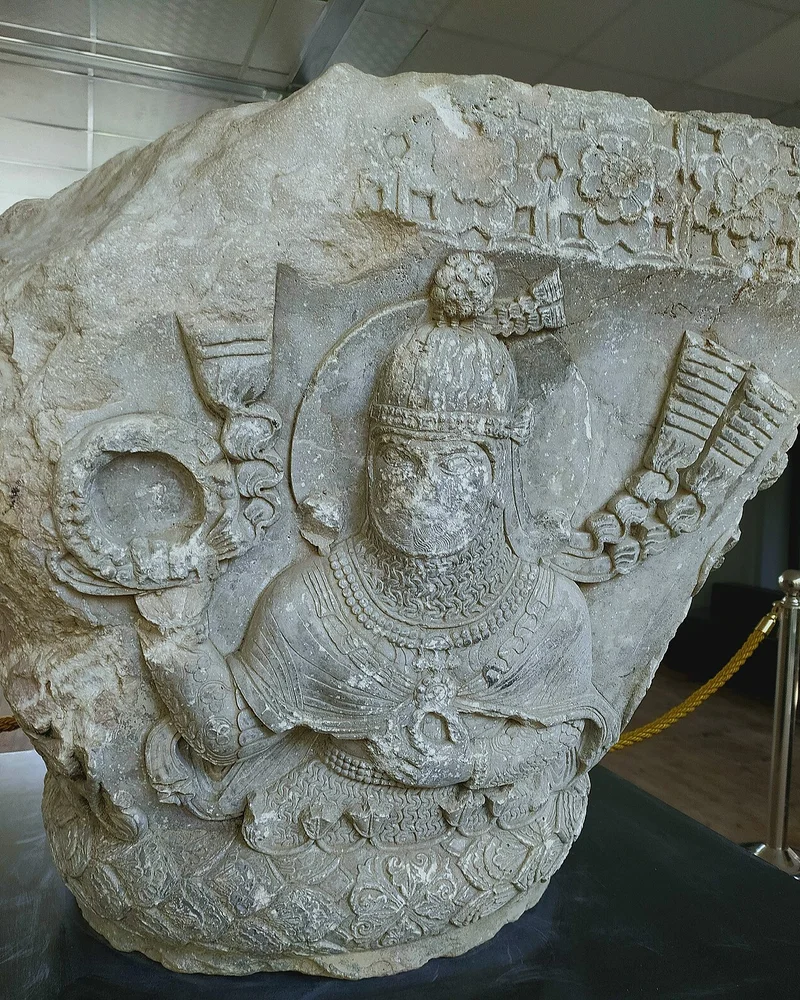
The star Sirius as a rain-bringing yazata, who in the Tir Yasht descends to the cosmic sea as a white horse, is at first overcome by the black horse of the drought demon Apaosha, and then, strengthened by worship, defeats him and releases the rains.
 deity
Verethragna
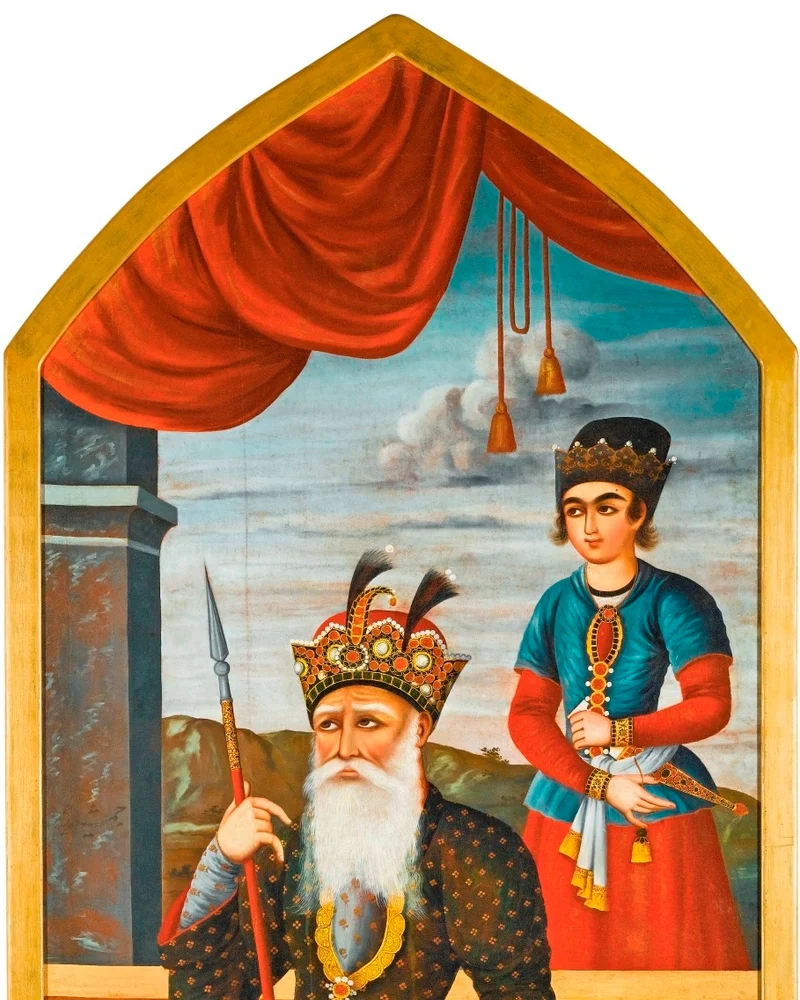
The yazata of victory, 'best-armed of the heavenly gods', who comes to Zarathushtra in ten shapes, from a strong wind and a golden-horned bull to a boar and a raven-like bird, and who gives his name to the highest grade of sacred fire.
 deity
Yima
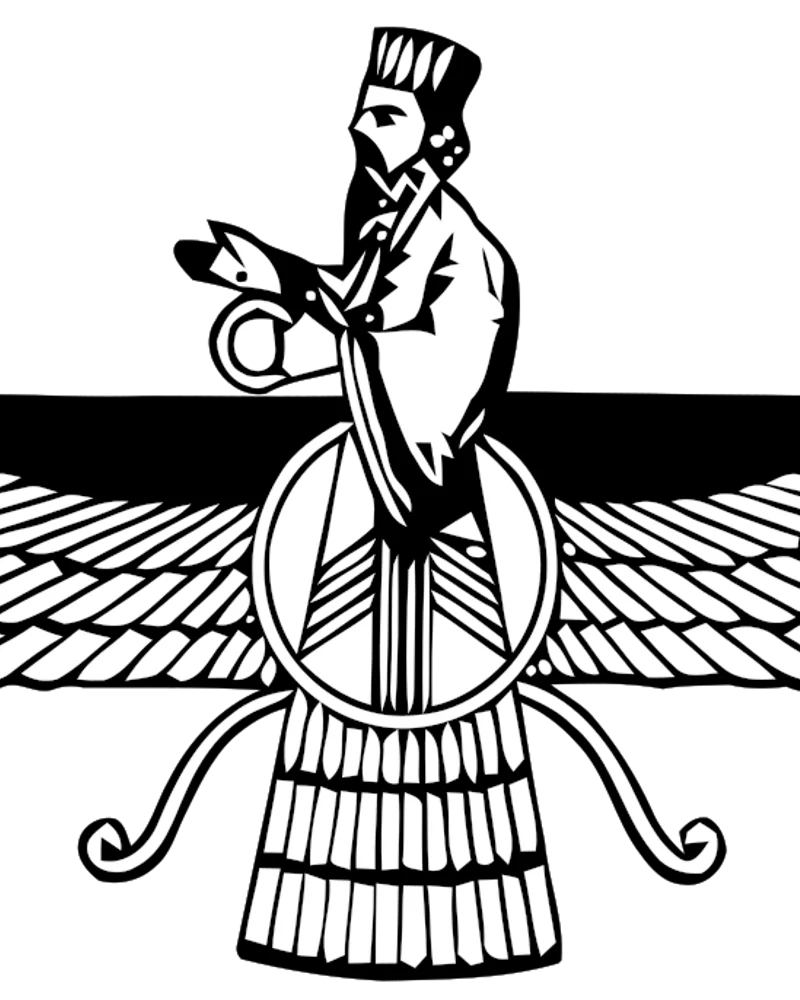
The first king, son of Vivahvant, under whose rule there was neither cold nor heat, age nor death; in the Vendidad he builds an enclosure to preserve life from devastating winters, and in the Shahnameh, as Jamshid, he loses the royal Glory through pride.
 deity
Zurvan
Infinite Time, whom a Sasanian-era current of Zoroastrian thought made the father of both Ohrmazd and Ahriman, born as twins from his sacrifice and his doubt; known mainly from hostile Christian and Armenian writers, and rejected by later orthodoxy.