

Fuzhu
Mythological Narrative
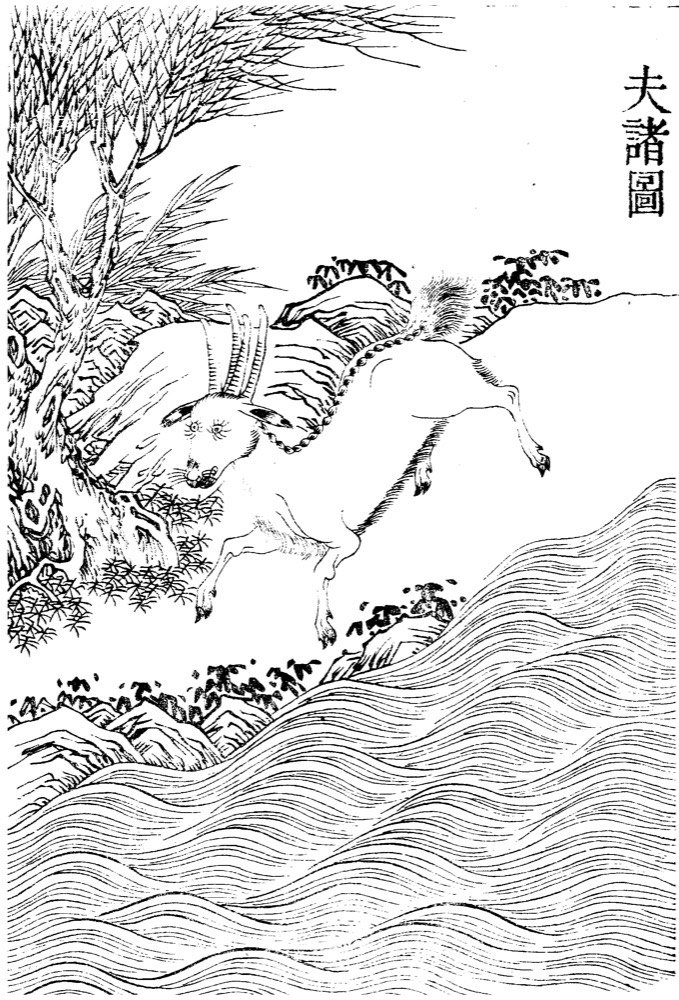
Mount Ao'an, first peak of the third central sequence, stands near the Yellow River; ornamental jade veins its southern slope, ochre and gold its northern, and the god Xunchi dwells on it. Among its animals the classic records the Fuzhu, a beast shaped like a white deer but carrying four horns. The text adds only the formula of consequence: wherever it shows itself, that settlement will suffer a great flood.
A white deer was normally good news. Under Emperor Wu of the Han, foot-square pieces of white-deer hide served as ceremonial currency at court, and official histories logged each capture of a white deer among the auspicious omens. The Fuzhu wears that lucky shape with four extra horns and reverses the message. It belongs to the book's roster of portent beasts, each bound to a single calamity: the Huashe likewise signals flood, the Mingshe drought, the Zhuyan war.
Academic Discussion & Critique
Exchange peer-reviewed hypotheses, comparative Indo-European etymologies, and archaeological field interpretations regarding Fuzhu.
You Might Also Like
Huashe
A creature of Mount Yang's waters with a human face, a jackal's body and bird's wings, moving with a serpent's crawl; its voice is a shouted rebuke, its appearance a flood warning.
Mingshe
A serpent of Mount Xian's waters with four wings and a call like a struck stone chime; wherever it appears, that town will suffer drought — counterpart to the flood-bringing Huashe.
Taifeng
The auspicious god of Mount He, human in form with a tiger's tail, moving in light and able to stir the qi of heaven and earth — blamed by commentators for the storm that once bewildered King Kongjia of Xia.
Changyou
A beast of Mount Changyou shaped like a macaque but with four ears, its voice like a human groan; whichever district it appears in will suffer great floods.