


Maya Mythology
Maya Mythology traditions, cosmology, and ancient mythology.
Mythological Figures & Lore
Showing all 26 records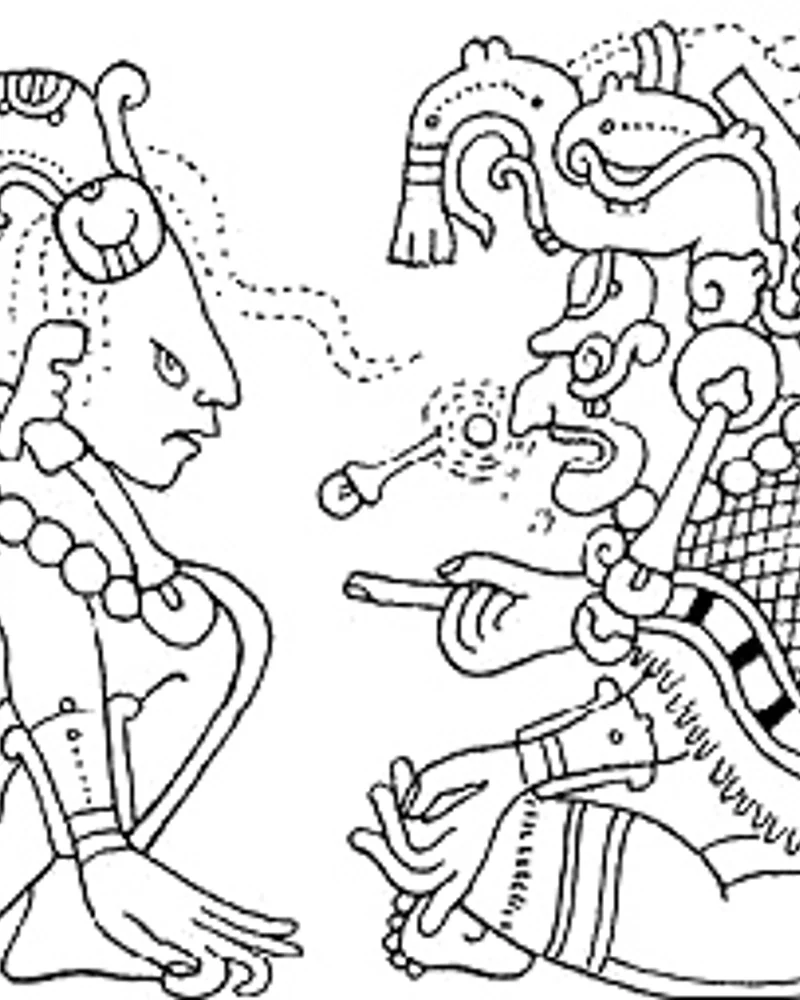 deity
Ah Puch
The Maya god of death and ruler of Metnal, the lowest level of the underworld. Depicted as a skeletal figure with exposed bones and decay, Ah Puch represents the terror of death.
 creature
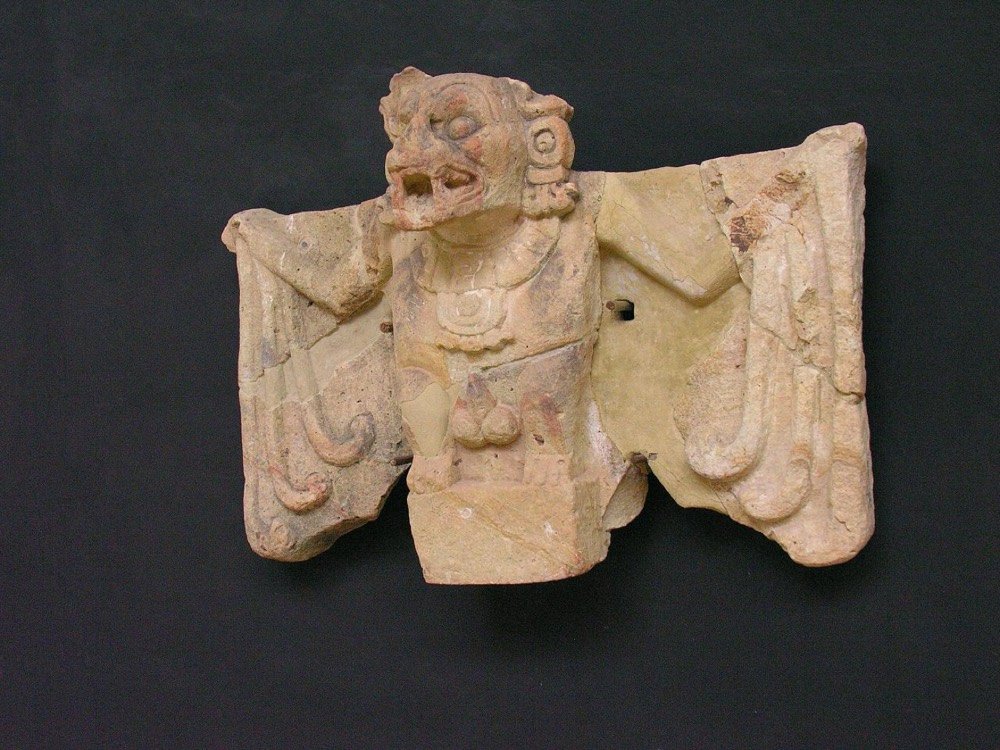
Camazotz
The great bat of Xibalba's Bat House, its snout a blade. When Hunahpu peeked from his blowgun shelter to check for dawn, Camazotz snatched his head away to hang as the game ball.
 deity
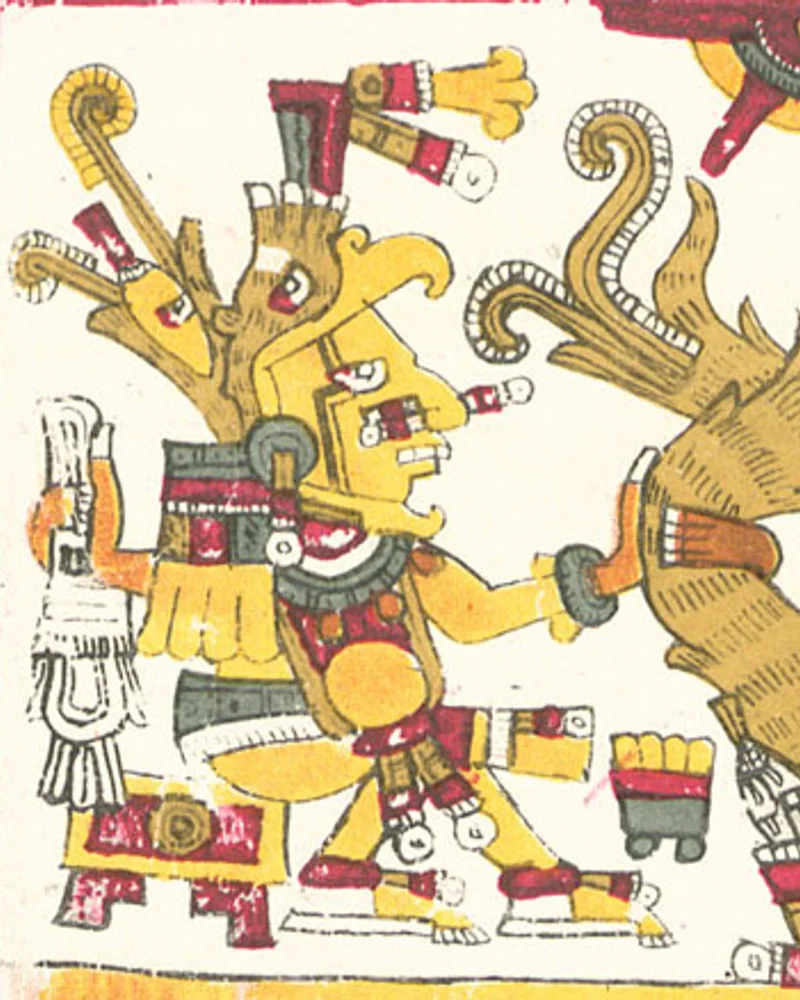
Centeotl
The Aztec god of maize and sustenance. Centeotl represents the sacred maize plant that sustained Mesoamerican civilization.
 deity
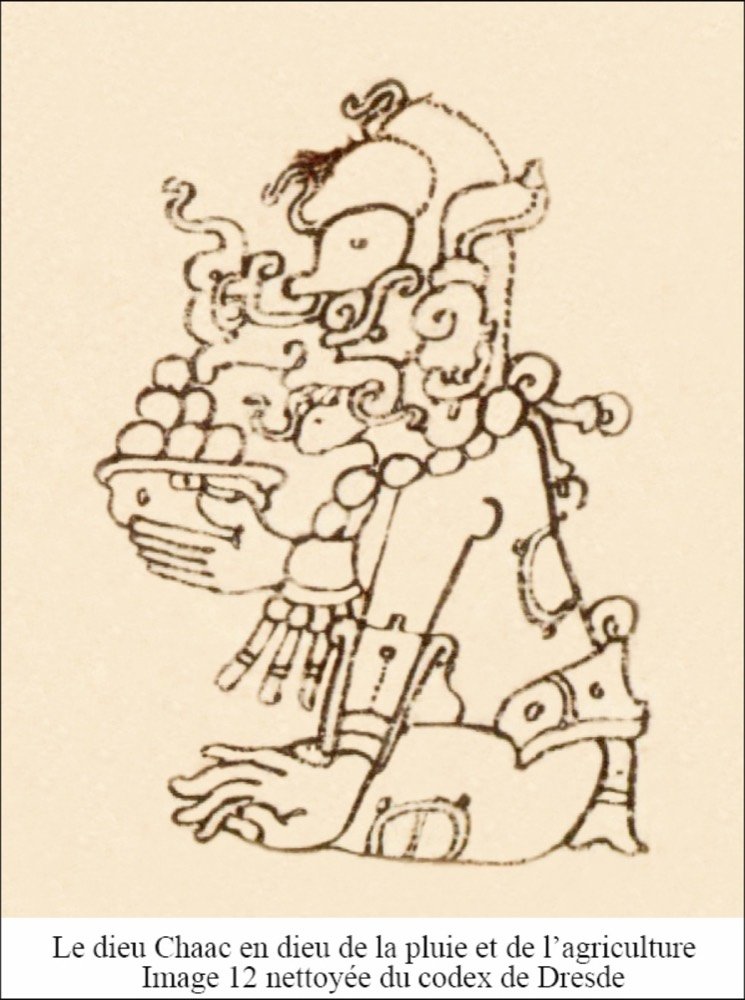
Chaac
The Maya rain god, long-snouted and scaled, who strikes the clouds with a stone axe to make lightning. Four colored Chaacs guard the directions; Yucatec villages still hold rain ceremonies in his name.
 deity
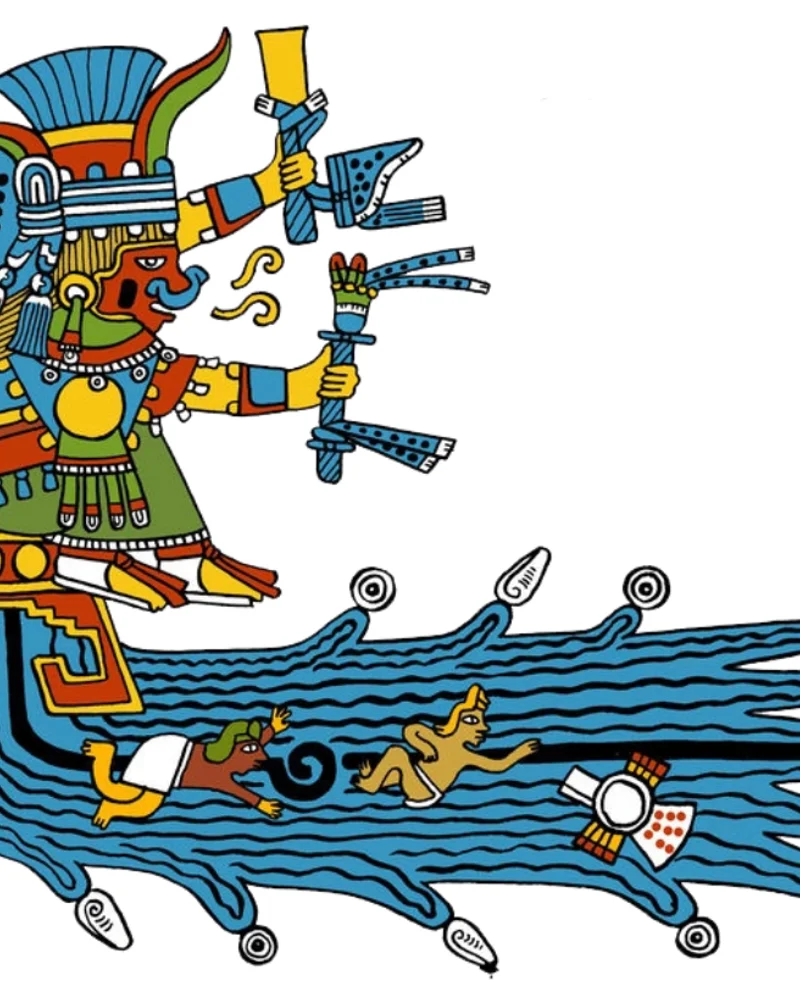
Chalchiuhtlicue
The Aztec goddess of flowing water, rivers, and lakes. Consort of Tlaloc, Chalchiuhtlicue presided over the Fourth Sun before its destruction by flood. She is the patron of newborns and purification.
 deity
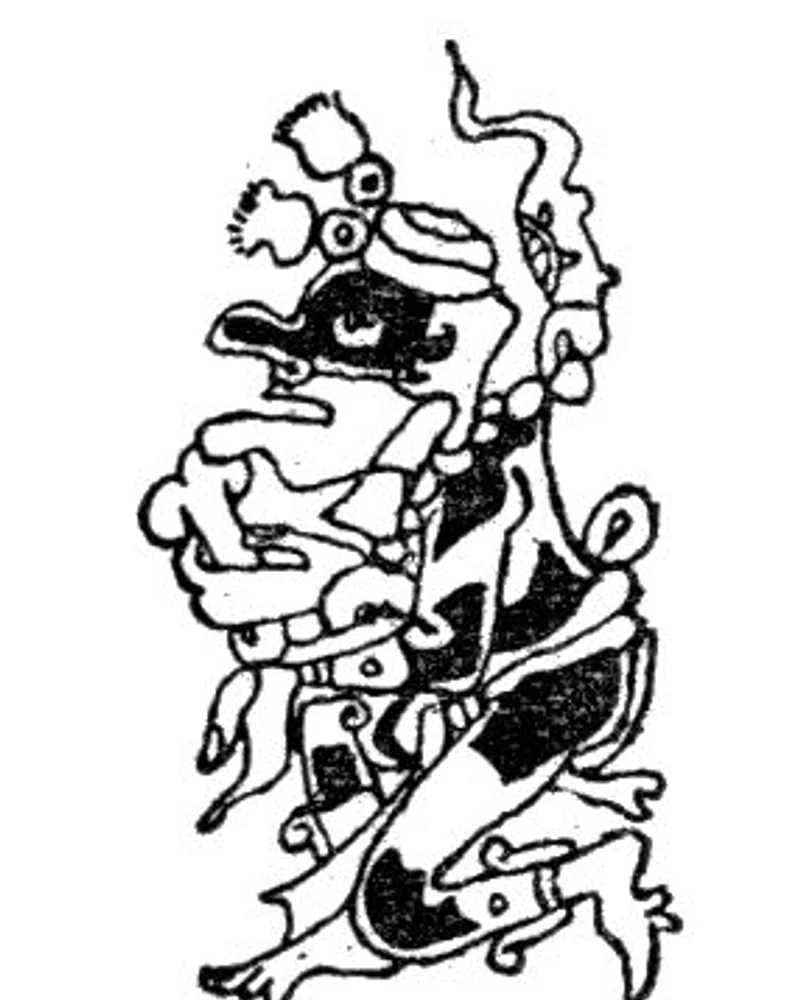
Ek Chuaj
The black-faced Maya god of merchants, cacao, and traveling traders. Ek Chuaj protects those who journey along trade routes and blesses the cultivation of sacred cacao.
 artifact
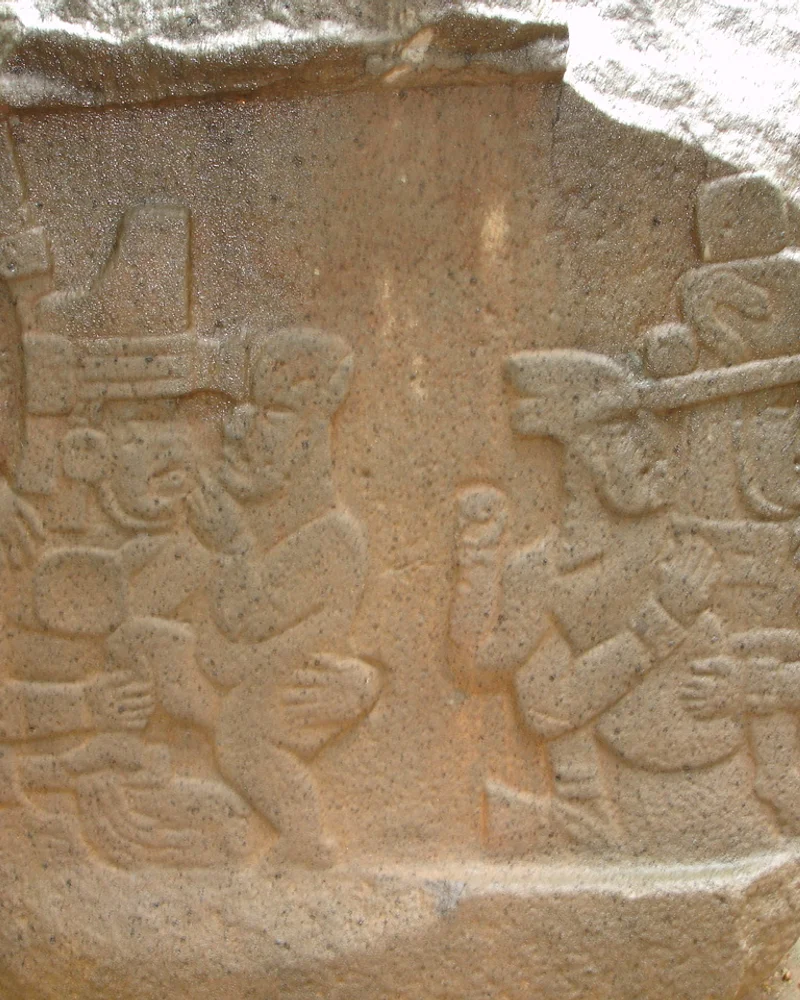
Blowgun of the Hero Twins
The blowgun Hunahpu and Xbalanque use to strike the arrogant bird-demon Seven Macaw and later to navigate the trials of Xibalba.
 deity
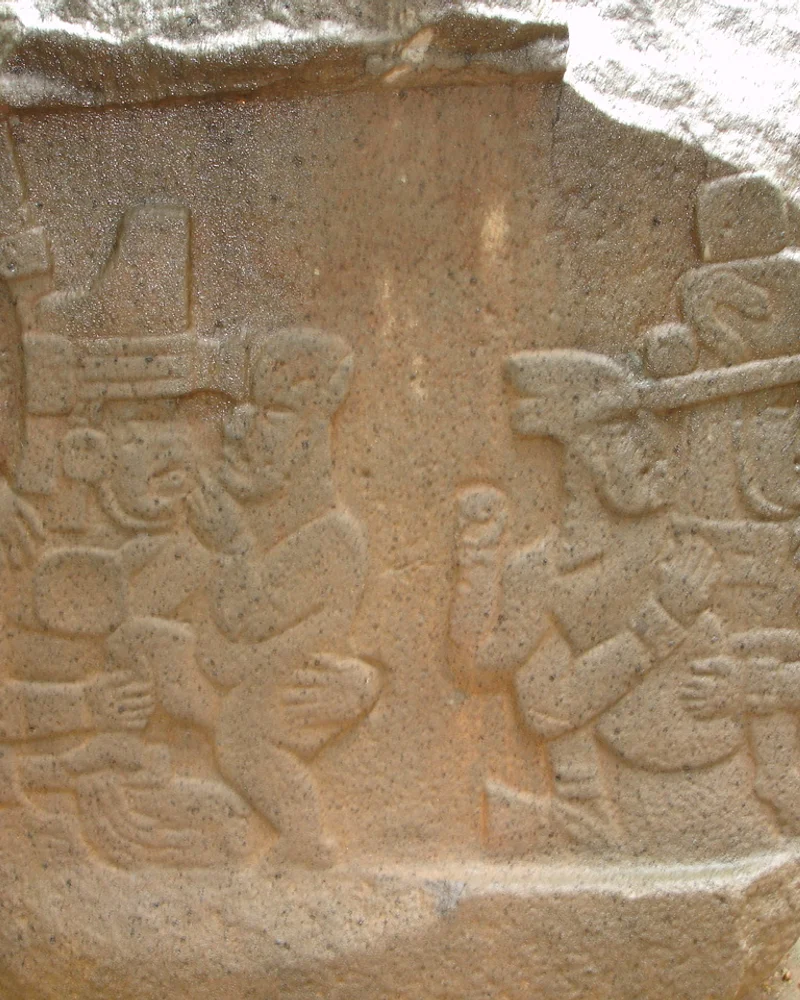
Hunahpu and Xbalanque
The Hero Twins of Maya mythology, sons of the maize god Hun Hunahpu. Through cleverness and sacrifice, they defeated the lords of death and became the sun and moon.
 spirit
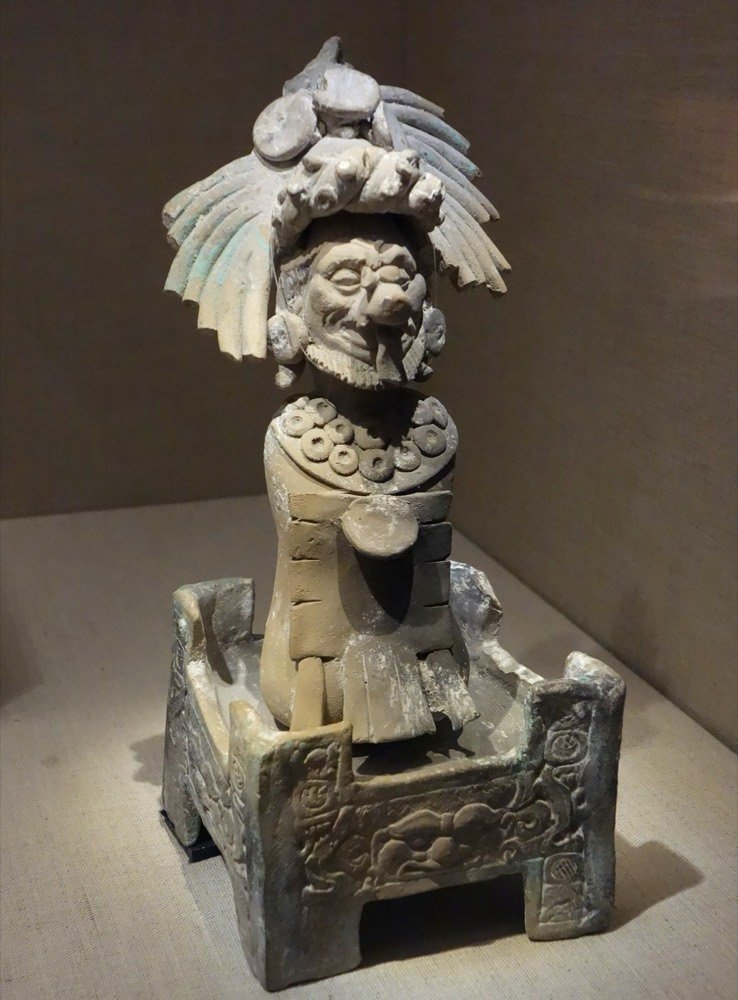
Hun Batz and Hun Chouen
Elder half-brothers of the Hero Twins, master flautists, singers, writers, and carvers, lured up a tree and turned into monkeys for abusing the infants. Maya artisans and scribes invoked them ever after.
 deity
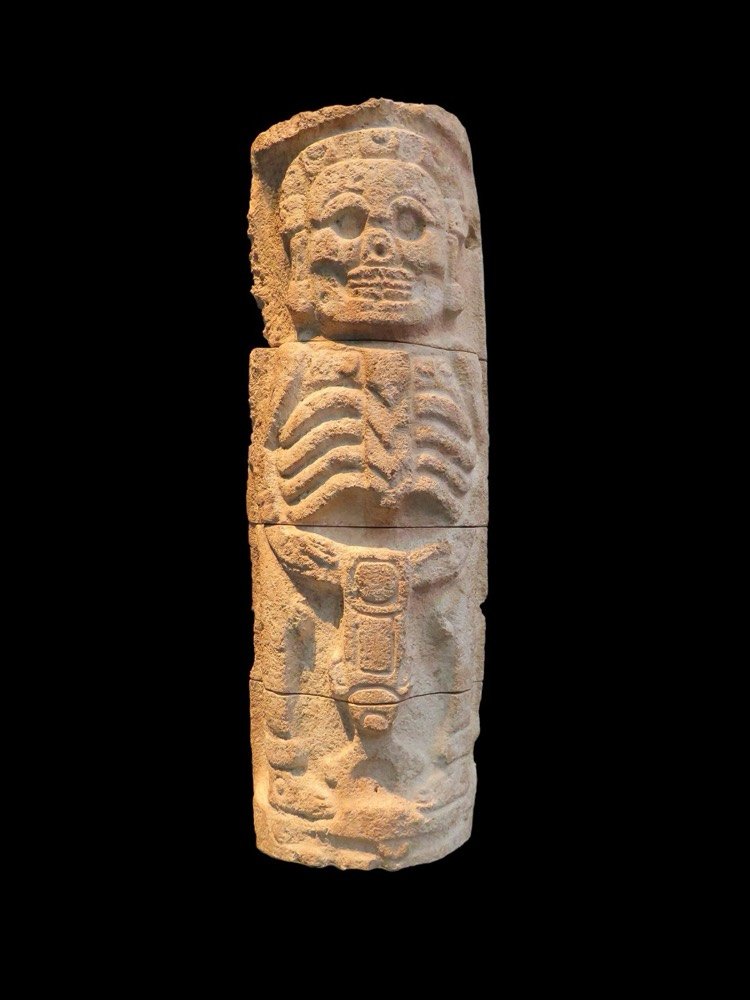
Hun Came and Vucub Came
The paired supreme lords of Xibalba, "One Death" and "Seven Death." They sent owl messengers to summon ballplayers to their doom, until the Hero Twins killed them in the sacrifice trick they begged to see.
 deity
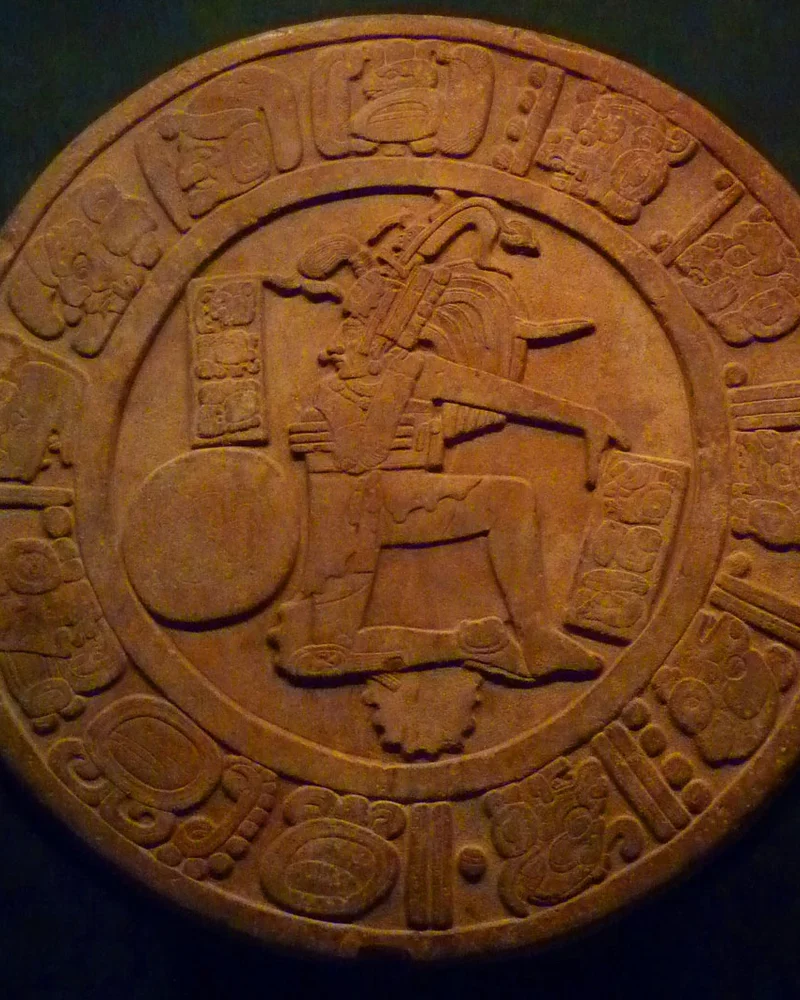
Hun Hunahpu
The Maya maize god, father of the Hero Twins. Hun Hunahpu's death in Xibalba and resurrection by his sons represents the planting and sprouting of maize, the fundamental cycle of Maya agricultural life.
 hero
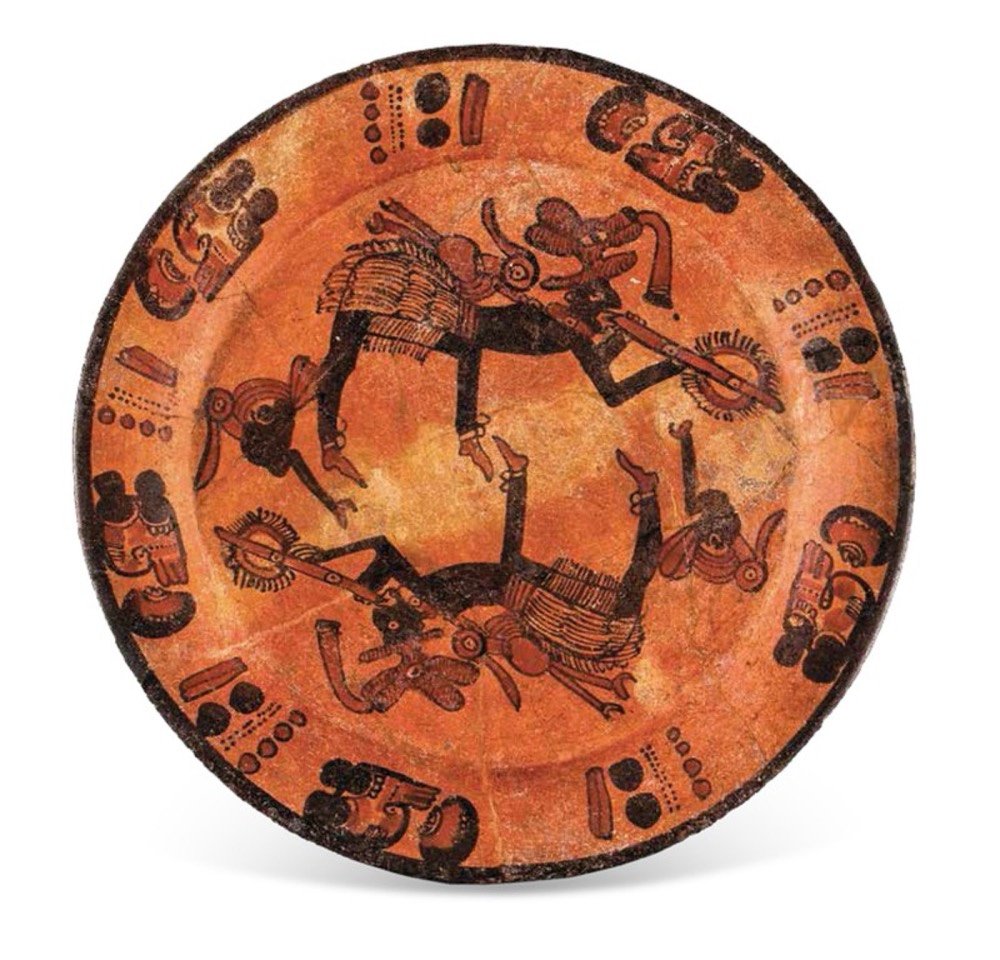
Hunahpu and Xbalanque
Twin heroes of the Popol Vuh: they shot down the false sun Seven Macaw, descended to Xibalba, and beat the death lords at their own game before rising as sun and moon.
 deity
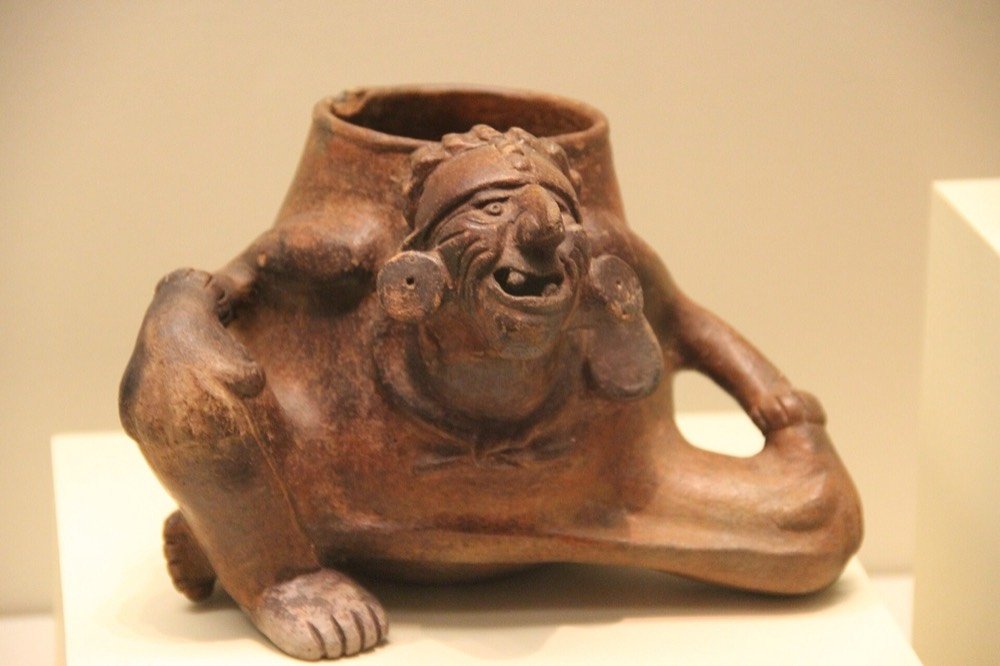
Itzamna
Supreme sky god of the Maya pantheon, "God D" of the codices: a toothless old man enthroned on a sky-band. Colonial sources credit him with inventing writing and the calendar.
 deity
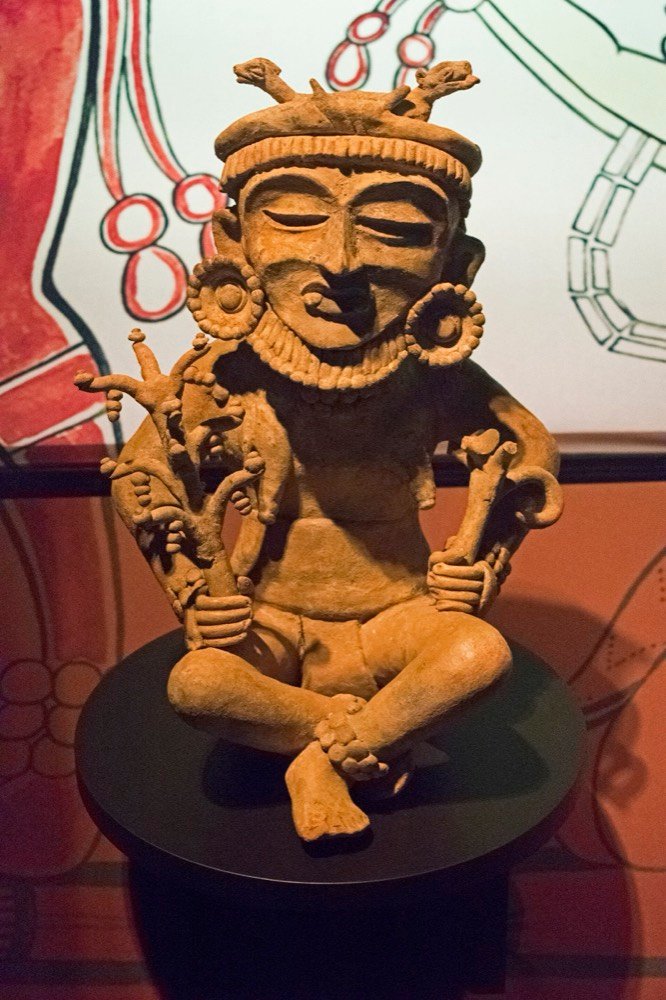
Ix Chel
The aged Maya goddess of midwifery, medicine, weaving, and divination. On the last page of the Dresden Codex she pours the world-ending flood from her jar. Women made pilgrimage to her shrine on Cozumel.
 deity
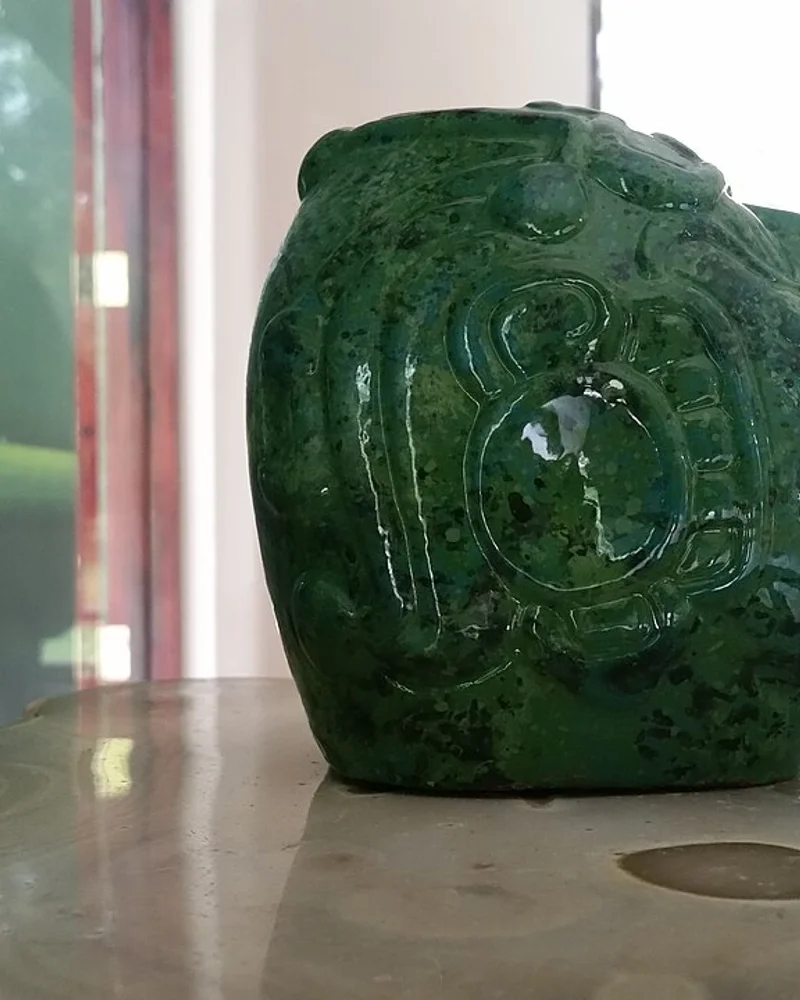
Kinich Ahau
The Maya sun god with large square eyes and jaguar features. Kinich Ahau rules the daytime sky and transforms into the Jaguar God when traveling through the underworld at night.
 deity
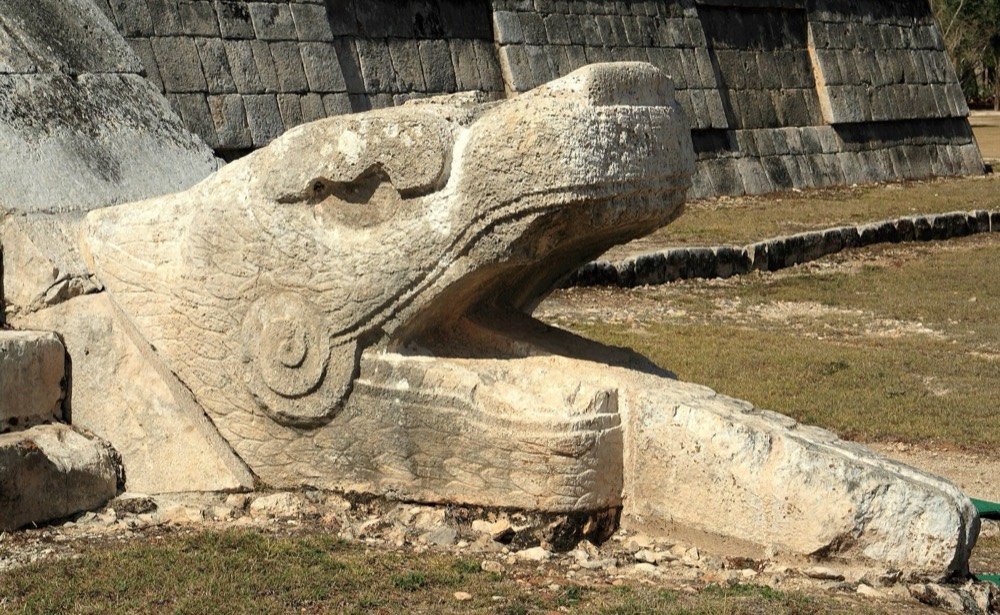
Kukulkan
The feathered serpent of Yucatec Maya religion, counterpart of Quetzalcoatl. At each equinox a serpent of light and shadow descends the stairway of his pyramid at Chichén Itzá.
 deity
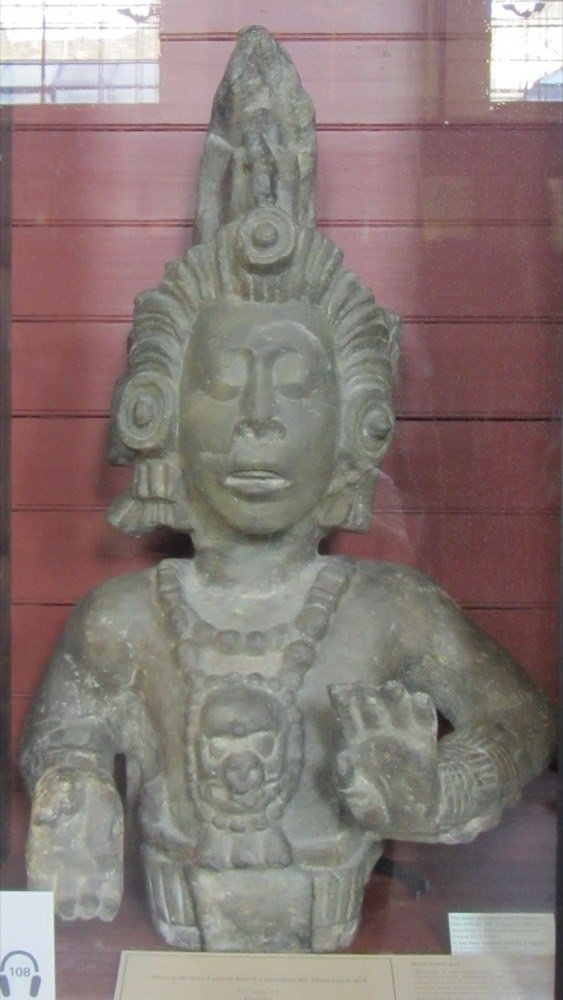
Maize God
A beautiful youth of Classic Maya art whose elongated, tonsured head mimics an ear of corn. Slain in the underworld, he rises again through the cracked turtle shell of the earth.
 creature
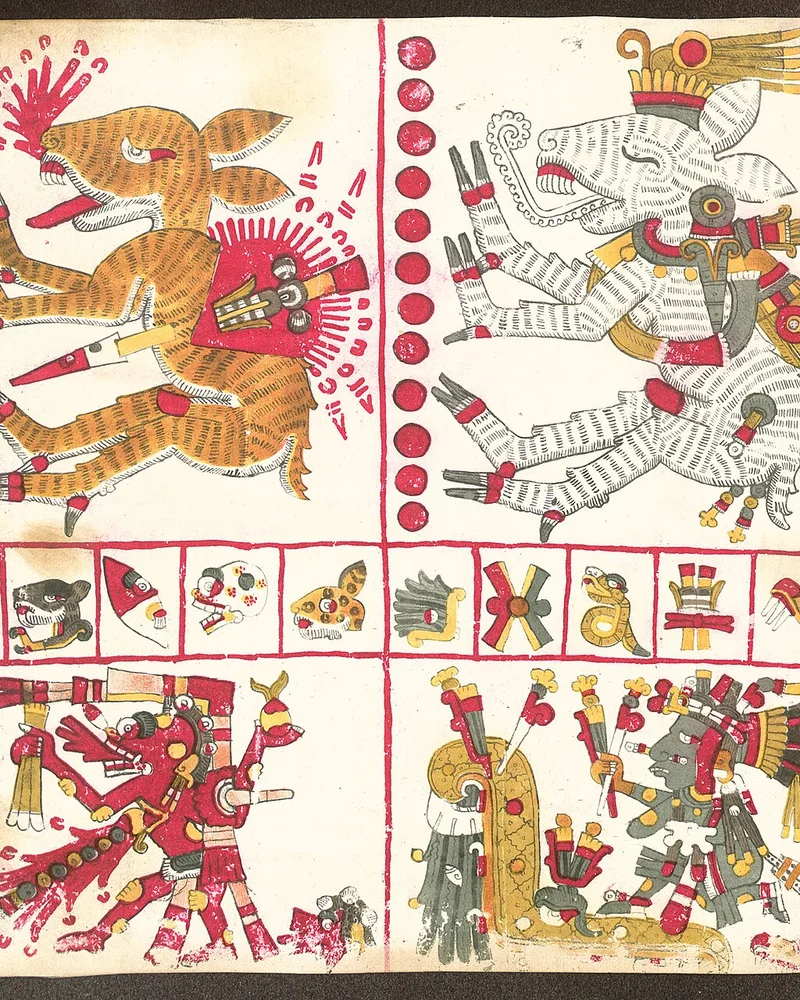
Nagual
A shapeshifting sorcerer or spirit animal from Mesoamerican belief systems. Each person is believed to have a nagual spirit that shares their soul, typically in animal form. Powerful naguals can transform into jaguars, eagles, or other creatures, and shamans use this ability to travel between worlds, heal the sick, or curse enemies.
 artifact
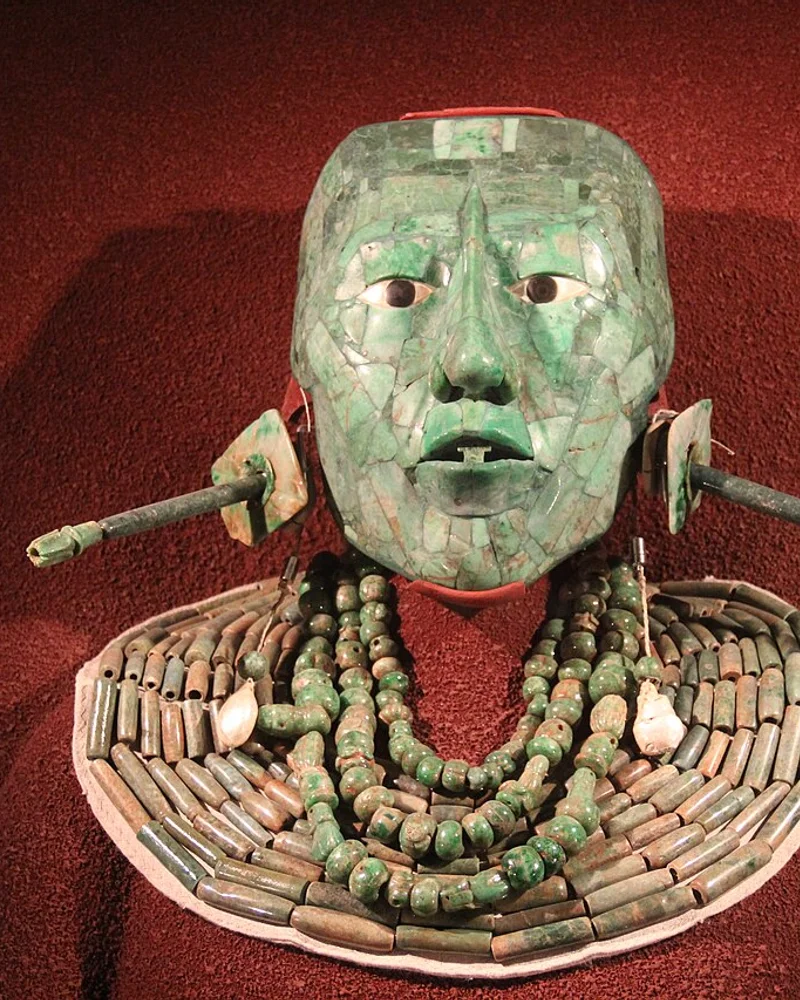
Pakal's Sarcophagus Lid
The carved lid of K'inich Janaab' Pakal's tomb at Palenque — a world-tree vision of descent and rebirth between underworld and sky.
 tale
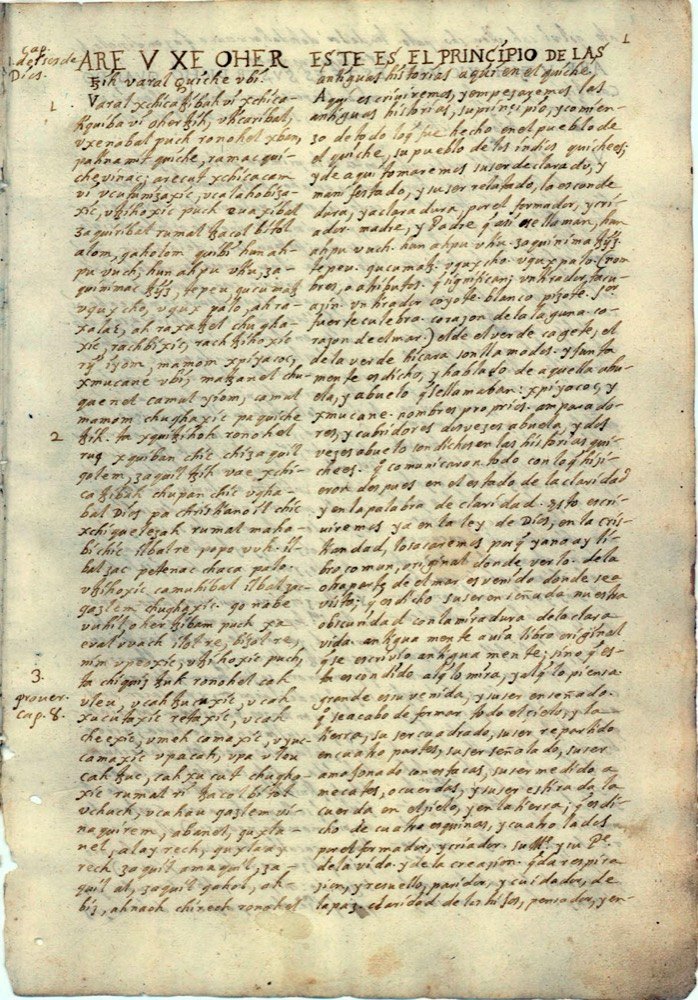
The Popol Vuh Creation
In the stillness of sea and sky, the Plumed Serpent and Heart of Sky spoke the word "Earth" and mountains rose. People of mud and of wood both failed; true humans were shaped at last from maize dough.
 creature
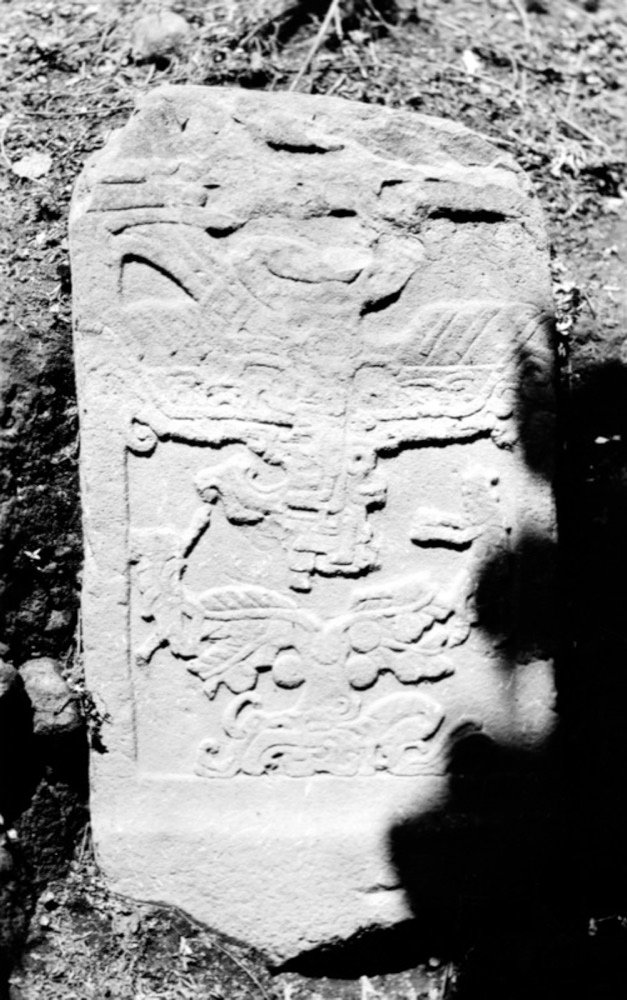
Vucub Caquix
"Seven Macaw," a giant bird with jeweled teeth and gleaming metal eyes who proclaimed himself sun and moon before the true dawn, until the Hero Twins shot him and pulled his shining teeth.
 artifact
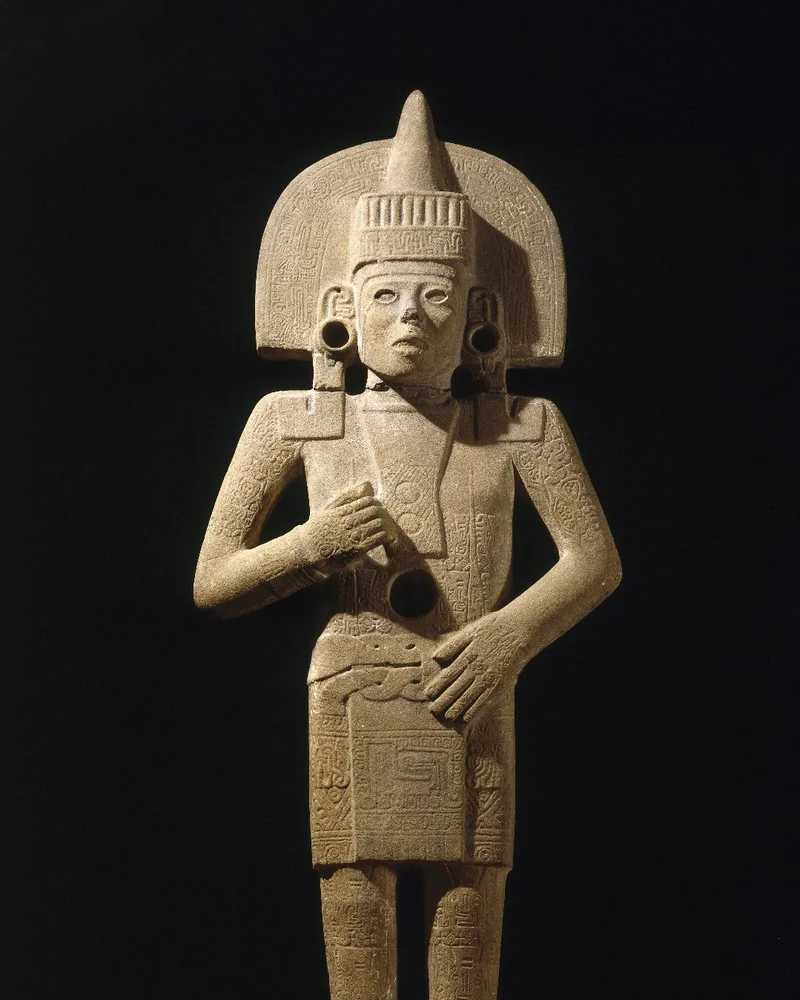
Wind Jewel of Quetzalcoatl
The spiral wind jewel (ehēcatl) associated with Quetzalcoatl as Ehecatl, the wind aspect — breath that clears the way for rain and life.
 place
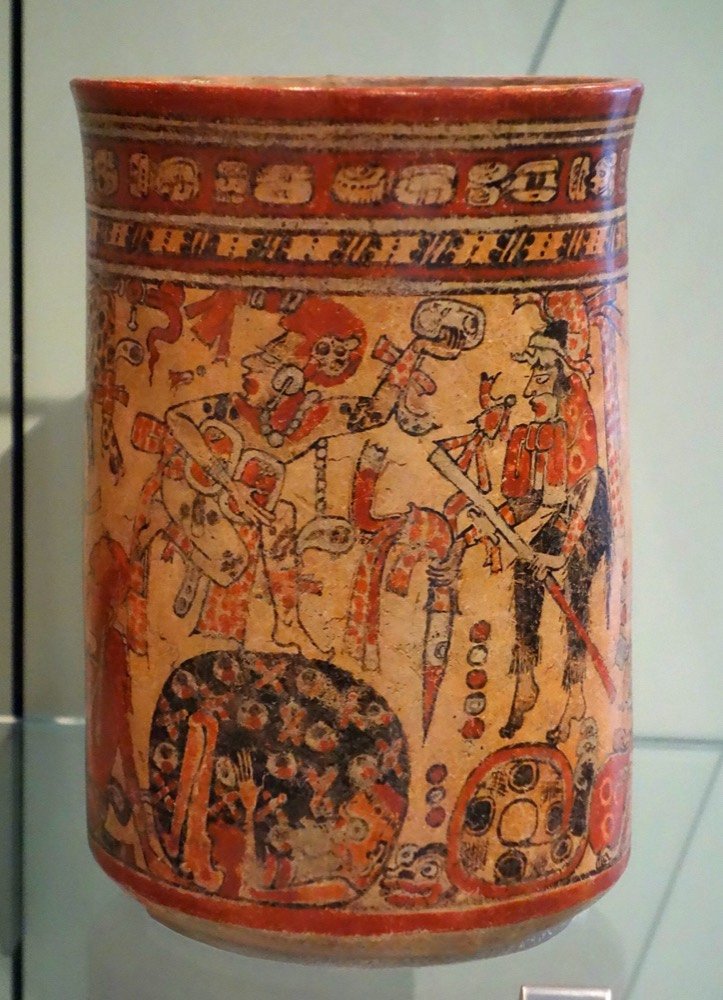
Xibalba
The Maya underworld, "place of fright" in K'iche'. The road down crosses rivers of scorpions, blood, and pus to a crossroads where the black road speaks, and the death lords kill their guests by humiliation, ballgame, and trial houses.
 deity
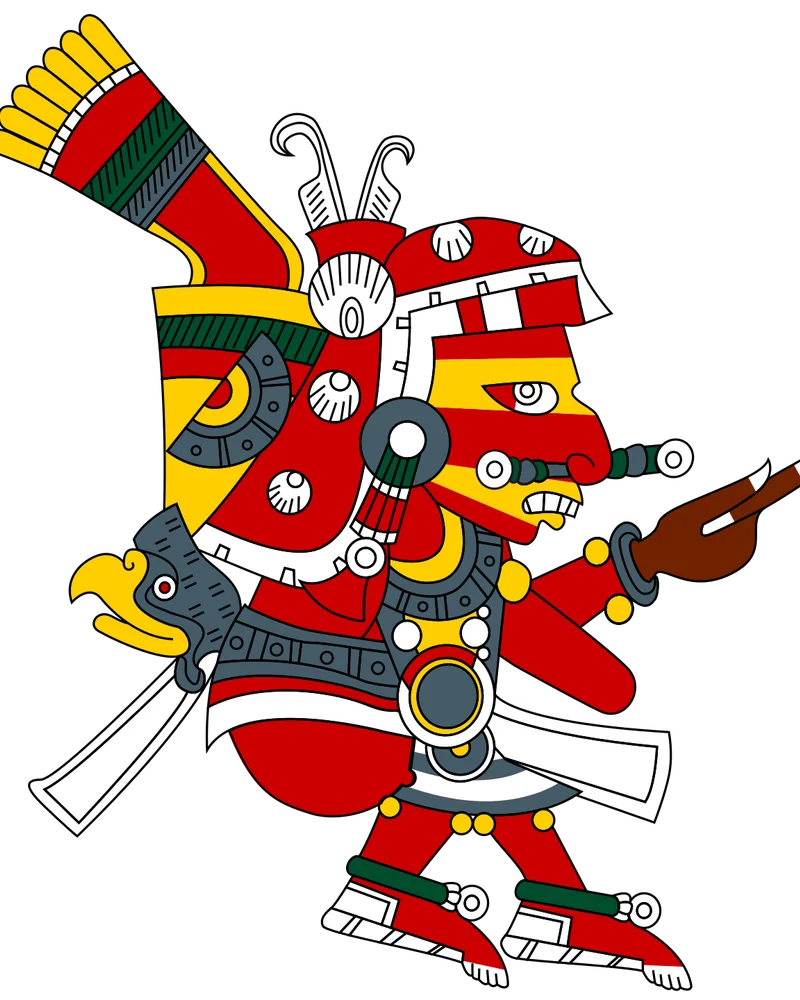
Xipe Totec
The Aztec god of spring, renewal, and new vegetation. Xipe Totec represents the cycle of death and rebirth in nature. Priests wore the flayed skins of sacrificial victims, symbolizing the earth's new covering of vegetation.
 deity
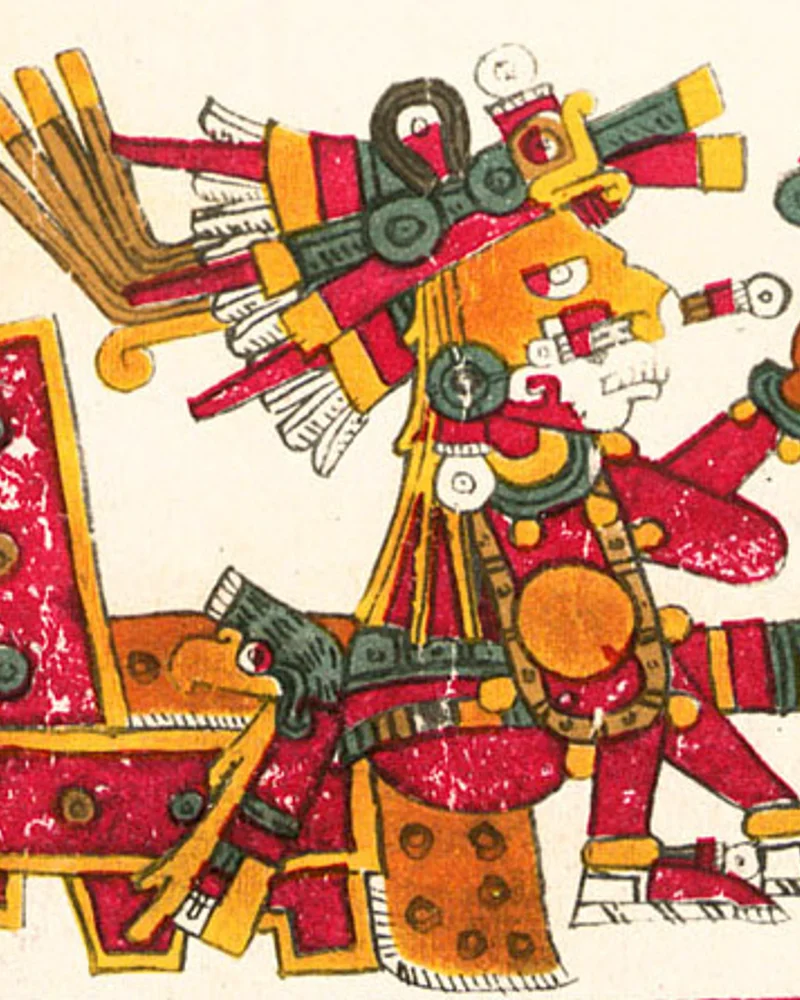
Xochipilli
The Aztec prince of flowers, art, and pleasure. Xochipilli presides over creativity, games, beauty, and ecstatic states, representing life's joyful aspects.
 deity
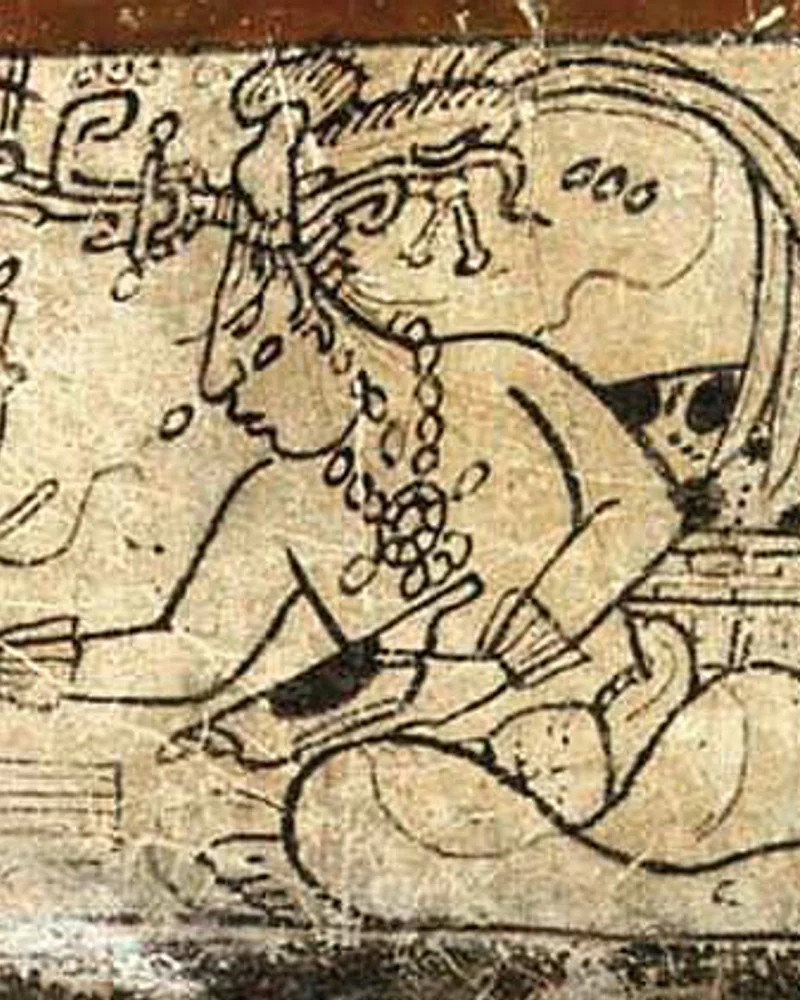
Yum Kaax
The youthful Maya god of maize, agriculture, and wild nature. Yum Kaax represents the life-sustaining bounty of cultivated fields and untamed forests.