

Bes
Also known as: Aha (an early form)
Mythological Narrative
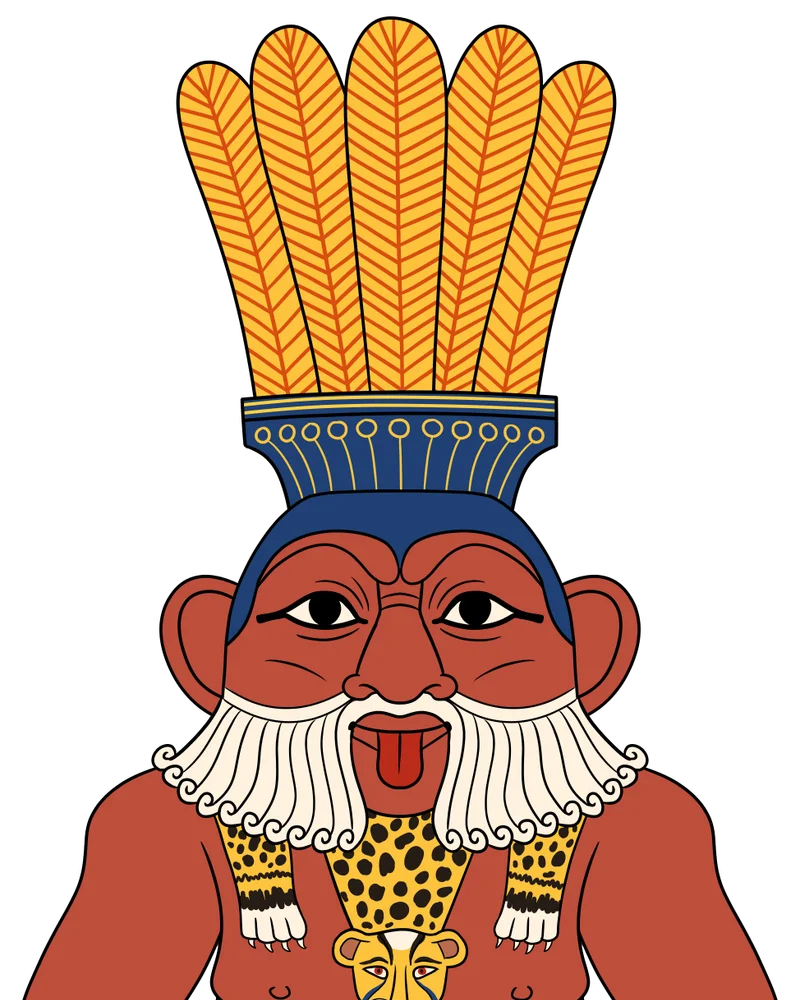
A dwarf-bodied, lion-maned household protector god who warded off evil spirits, nightmares, and dangers to mothers and children. Unlike most Egyptian deities, Bes was typically shown facing forward rather than in profile, and his cult was overwhelmingly domestic rather than centered on formal state temples.
Scholarly Commentary & Evolution
## Protector of the Home
Bes was among the most widely beloved deities in everyday Egyptian life, despite never receiving the grand state temples built for gods like Amun or Ra. Depicted as a bow-legged dwarf with a lion's mane and tail, a protruding tongue, and a fierce, often almost comic grimace, Bes was believed to frighten away evil spirits, snakes, and other dangers through sheer grotesque ferocity.
### An Unusual Iconography
Egyptian art overwhelmingly depicted gods and people in profile. Bes is a striking exception, shown facing directly outward toward the viewer, a composition that emphasized his role as a protective, apotropaic presence meant to confront threats head-on. He is frequently shown brandishing knives, snakes, or other weapons, dancing, or playing musical instruments such as the tambourine.
### Guardian of Childbirth
Bes was especially associated with protecting women in childbirth and watching over young children. His image appears on household furniture, cosmetic items, amulets, and on the walls of "birth houses" (mammisi) attached to major temples, such as those at Dendera, where reliefs of Bes accompany scenes of divine birth. Mothers and children wore amulets bearing his image for protection, and his boisterous, dancing depiction was thought to entertain and soothe infants while warding off harmful forces.
### A God of the People
Unlike the great state gods with elaborate priesthoods, Bes belonged primarily to ordinary household religion. He required no formal temple or organized clergy to be effective; his presence was invoked directly in the home, worn on the body, or painted on domestic walls, making him one of the most consistently popular deities across all social classes throughout much of Egyptian history.
Classical Art & Museum Artifacts
High-resolution museum artifacts, classical sculptures, pottery reliefs, and bronze idols preserving authentic historical representations of Bes.
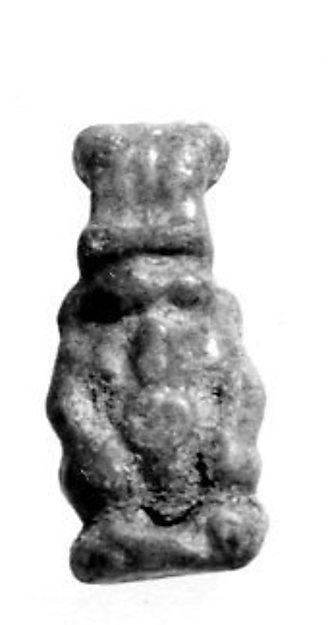
Bes amulet
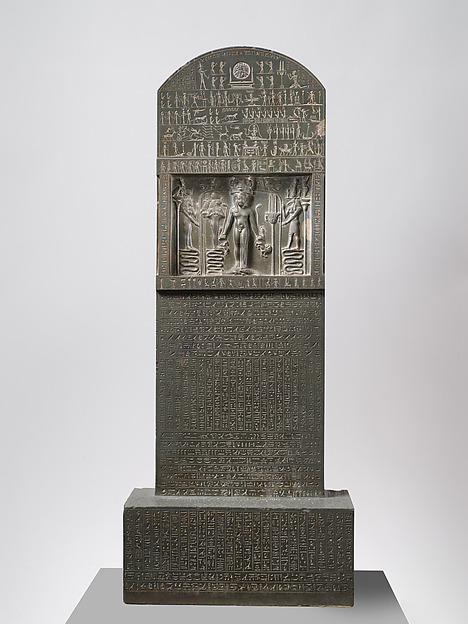
Magical Stela with Horus the Child

The Moon Goddess Chang E
Sphinx of Hatshepsut

Terracotta skyphos (deep drinking cup)
Academic Discussion & Critique
Exchange peer-reviewed hypotheses, comparative Indo-European etymologies, and archaeological field interpretations regarding Bes.
You Might Also Like
Nephthys
Goddess of mourning and protector of the dead. Sister-wife of Set but loyal to Isis. She aided Isis in gathering Osiris's body and mourned him.
Amun
The Theban god whose name means 'the Hidden One'; fused with Ra as Amun-Ra, he became Egypt's state god, housed at Karnak, and Alexander the Great sought his oracle at Siwa.
Anubis
The black jackal-headed god of embalming who made the first mummy for Osiris; he guards cemeteries, guides the dead, and steadies the scales at the judgment of the heart.
Bastet
The cat-headed goddess of the home, fertility, and festivity. Her annual festival at Bubastis was Egypt's largest, and her sanctuaries have yielded cat mummies by the tens of thousands.