

Sources
This retelling follows the Māori tradition as published by George Grey in *Polynesian Mythology* (1855), from texts written by Māori authorities of the time, and notes where other tellings differ. The story is told across Polynesia in different forms; in Māori tradition it closes the Māui cycle.
The Last Feat
Maui had trapped the sun with ropes, stolen fire from Mahuika, and hauled land from the sea. Still humans died. In Grey's version his father, Makeatutara, had made an error in the ritual performed over Māui as a child, and warned that this meant he would die; Māui answered by resolving to defeat death itself. He would enter the sleeping goddess of death, Hine-nui-te-pō, great woman of the night, and pass through her body, so that death would no longer have power over people.
The Approach
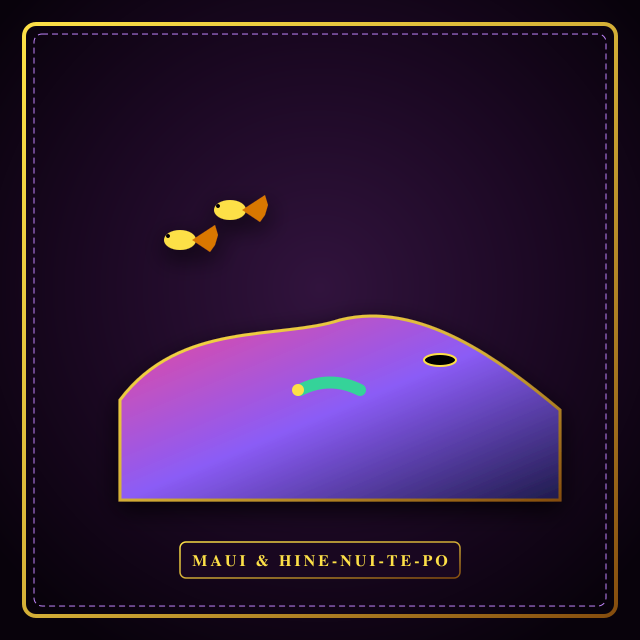
He went to her with his companions the little birds, among them the tomtit, the robin, the grey warbler, and the fantail (tīwakawaka), and warned them to keep silence whatever they saw. As he crawled between the sleeping goddess’s thighs toward her heart, a fantail’s laughter broke the hush. She woke, crushed Maui, and death remained in the world.
Why We Die
The story does not scold curiosity alone — it marks a boundary. Maui’s cleverness remakes geography and daylight; it cannot unmake the night of death. In Māori tradition, his failure is why humans are mortal still.
Hina appears across Polynesia in many guises; here the great lady of night closes the trickster’s final wager.
Who Was Hine-nui-te-pō?
In widely told Māori tradition, Hine-nui-te-pō was once Hine-tītama, the dawn maiden, daughter and wife of Tāne; when she learned that her husband was also her father, she fled to the underworld, where she receives her descendants when they die. The fantail's laughter is remembered whenever the bird flits close to people, and in some traditions its appearance indoors is taken as an omen of death.